What’s a moment when you realized you were officially an adult?
I was the youngest of my siblings; my sister was the eldest, my brother was the middle, and the youngest was me.
So I didn’t have to play the adult much.
It wasn’t until I cradled my first baby in my arms that I felt both the beauty of motherhood and the weight of its responsibilities. And since that day, I realised it was time to play the adult.
As a full time mother, I played the adult with its different characters, moods, and shapes.
Yes, I played the kind nurse, the angry doctor, the mad teacher, the patient counsellor, the strict inspector, the loyal lawyer, the secret keeper, the watching owl, and so many others.
But the youngest sibling in me always finds a time and a space, to laugh, to play, and to have fun with family, friends, and even her own-self, with no adult roles to play.
At the beginning of 2026, I set my reading challenge target to sixty books.
A month or two later, I reduced it to thirty.
I thought it was better to achieve the target than to lose track of it.
This wasn’t cheating, was it?
But at least, I’ve been honest with myself.
So over the last two, no three, days, I finished a wonderful book, and it happened to be the thirtieth one.
This means my 2026 reading challenge is officially fulfilled.
Now I can read more, without any pressure.
My best reading challenge score was seventy-eight books in 2023,
and I was so happy with that big harvest.
But honestly, I’m not sure if I had followed the same strategy back then.
I mean if I had started with a target of thirty and ended up finishing seventy-eight books.
Things didn’t work with the same enthusiasm over the last few years, though.
Why? I wonder sometimes.
But, I do know why.
Mainly because of my stubbornness.
Once I set my mind to read a book, I want to finish it; even if I don’t like it, even if it gives me a headache, and even if it bores me to tears.
And I discovered another reason; the high target I set for myself.
Whenever I planned to read more books, I ended up reading far less than expected.
But we do learn from our mistakes.
So, I will stick to my old strategy; start with less and end up reading more.
And perhaps, for stubbornness, I’ll pretend to forget about the books I don’t like until the end of the year. Then I can say, “sorry but your time is out.”
So… well done, me, for achieving my reading target in August.
And I will let you know how many more books I finish by the end of this year.
What’s a skill you consider basic, that most people don’t actually know how to do?
If there’s a basic skill that most people don’t know, I think a superhero is urgently needed to reveal it.
But wait… superheroes don’t know basic skills, do they?
They mainly handle complicated missions with super-duper techniques.
So don’t expect superheroes to be any help with basic skills.
And if most humans need an instructor for basic skills, then they can rest aside for a bit.
Instead… can we think of other creatures who really know some basic skills most humans don’t?
No, please, don’t think of devils.
There are enough humans in devil’s clothing in the world.
Besides, all devilish “basic skills” would be nothing but devilish.
What about angels?
But angels are more protective than instructive.
They’re our pure guardians, not instructors.
What’s left?
Animals?
Yes, they can do.
Wouldn’t Darwin’s theory of “the Descent of Man” support this idea?
I’m not supportive of Darwin’s theory, but let’s pretend his argument was simply that animals know many basic skill most humans don’t.
Have you read I Am A Cat by Natsume Soseki?
I’m not sure if I ever wrote a review of this book.
Anyway, it crossed my mind as I was writing this post.
You know why?
Because the cat, this cute creature, was the main character and the narrator in the book.
And… she actually gives one of the most important basic skills I believe most humans don’t know, even though it’s very basic, and so simple.
Here’s the cat revealing the basic skill most people don’t do:
“In my opinion, there is nothing more unbecoming in the human type than its indecent habit of sleeping with the mouth open. Never in a lifetime would a cat be caught in such degenerate conduct. The mouth and the nose have their separate functions: the former is provided for the making of sounds and the latter for respiratory purposes.”
Thanks, Cat, and I’m glad to say I’m well acquainted with this basic skills, and thank the Lord I’m saved from this indecent habit.
Do you think we’re shaped more by our experiences or by who we are?
Are we shaped by experience or shaped by who we are?
This is not as easy as it looks.
At first glance, I said: experience.
Life teaches us how to live through the many experiences we gain day after day.
And… the more experiences we have, the more we change along the way.
So yes, experience does shape us.
But wait a minute…
I re-read the whole thing again.
Doesn’t us or we came before experience?
Yes, it’s who we are that first exists and shapes us.
Experience follows.
Experience offers possibilities and changes.
Yet, who we are is the root of our life tree.
Or, better put, who we are is made of a special fabric woven from too many threads.
There are certain things that make us but can’t be changed; things like our souls, our origin, and our families.
Yes, I know everything can be changed nowadays, including some of the things I just mentioned, but you can’t erase them from your “who you are” identity.
After each and every experiences you live through life, it’s “who you are” that manages it in the way “ who we are” wants.
Is your head spinning right now?
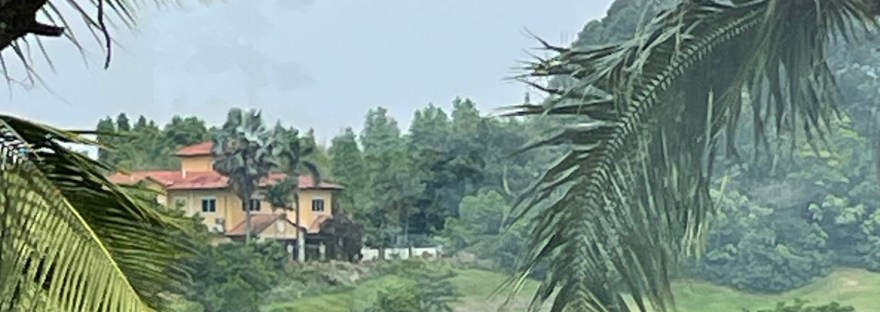
Mine is, but only because of the AC, which I don’t like at all. But in some places, it is the most convenient way to survive on holiday in a tropical country.
So, back to this life shaping player.
Simply, we are shaped by who we are.
Out of each and every experience, we’re the ones who decide whether to learn the lesson, to ignore it, or to destroy it.
Some experiences may push us to be cruel, savage, or selfish.
But in the end, it’s us who decide whether to follow the experience’s recommendations or not.
A flight with almost fourteen hours and a three hours transit, is not easy at all.
If you’re accustomed to these long… really long flights, then you really deserve an award for endurance.
I think I deserve two, since this is my first holiday with such a long journey.
Perhaps I deserve three, since this flight also comes with a big time difference.
Three or two hours difference wouldn’t be such a big deal.
But… wait, 1,2,3,4,5,6, 7 hours make a significant difference.
Time suddenly feels as if it’s going in opposite directions.
In the morning, you drag yourself out of bed, your eyes so heavy that you fall asleep again everywhere, at any moment.
At night, you feel wide awake, and surprisingly hungry and ready for outdoor activities.
Breakfast time becomes dinner time and dinner becomes breakfast.
The sun that plays tricks on you in the Uk is now punctual, serious, and happy.
How happy?
So happy that she’s laughing all the time, watching people out and about in sunglasses, hats, and face fans; all enjoying her majesty’s presence.
Rain visits often but, lightly so far, as if trying to lighten the mood.
Unfortunately, the mood refuses to be lightened because of humidity.
And humidity is that heavy, sweaty, stick neighbour no one likes.
And finally, after those first confused, steamy, lazy days, a gentle nudge of writing arrived, with a smooth landing, to save these funny moments in this post.
Can you live your whole life measuring things with a pencil and a ruler?
But a life like that will be so stiff.
By the way, using a pen and a ruler is a common expression is Arabic, or you can say in Egypt. If you say someone lives by a pencil and a ruler, you mean they measure everything in life.
Actually… it can be a compliment.
But it can also be a defect.
The extreme opposite of this condition is chaos.
And if someone is known as chaotic, this means their life goes upside down, aimless, and messy.
There’s no way chaotic can be an advantage.
But a bit of chaos won’t hurt.
Actually, it can make some change, bring a laughter, or earn you some skills.
And what better example is there than baking?
My daughter insists on following the recipe from A to Z, including the exact measurements and using the scale which I bought mainly for decoration.
Yet the kitchen under her supervision looks like bedlam.
I usually, perhaps out of experience, take the shortcut.
No measurements, no scale, and always sticky hands.
Still, the kitchen under my supervision looks no better.
In both cases, we enjoy the chaos in the chaotic kitchen, even though we chaotically complain about the mess.
But without this chaos, we would be sacrificing baking for the sake of glassy, glossy Kitchen.