
Just writing

The Watching Bird

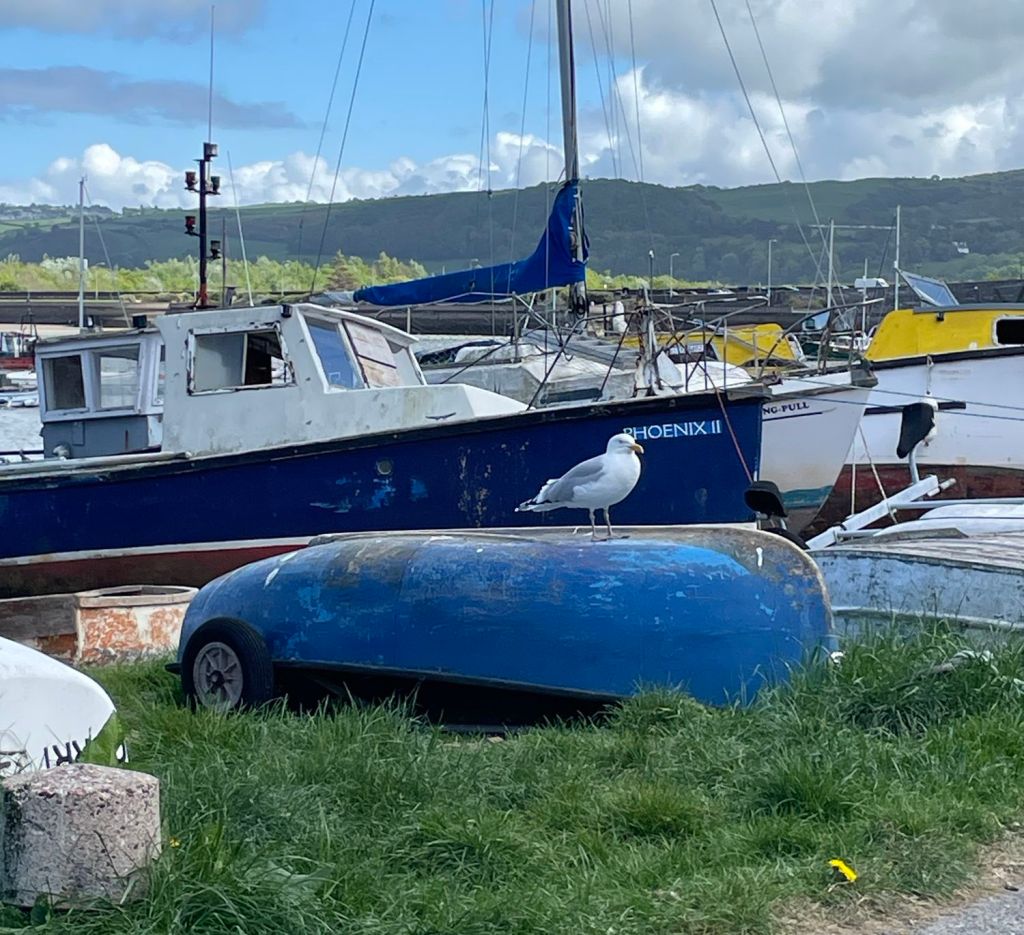
I smiled when I saw this gull as I took the photo. Can you see how confident and steady it paused as if it knew about photography and how to master the perfect pose. Perhaps it knows about social media, and dreams of becoming a celebrity among its own kind. That would be totally unbelievable!

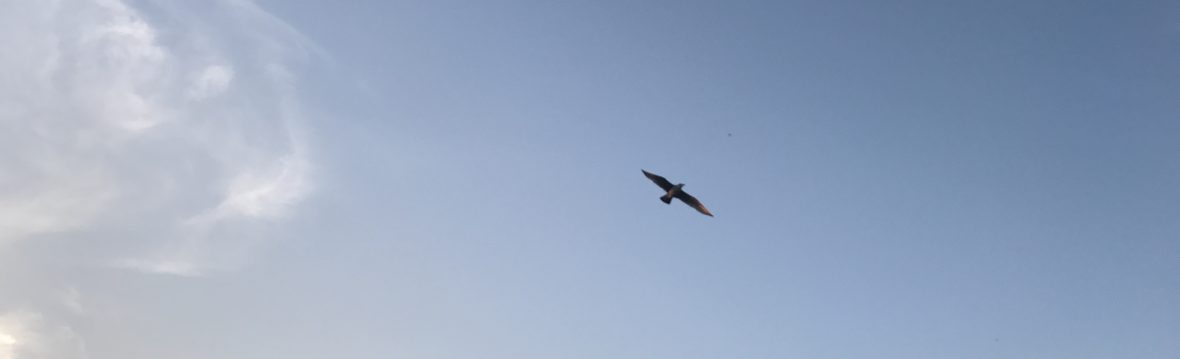
As you see in the photo, the sea, the boats, and the clear sky (it was all blue later on) create a beautiful, natural background. But what you can’t see behind my phone camera is the hustle and bustle on the seashore. There were rows of benches lined along the seafront, and people sat there eating, talking, and basking in the sun. We were there too— my daughter and my husband enjoying their ice-cream, and I drinking orange juice. It was just then when I saw that dangerous bird, landing gracefully on that picturesque boat, and watching every soul around just like a hawk watching its prey.

Such greedy birds! Nature provides plenty for them—fish in the sea, worms in the soil, and more hidden beneath the sand. Yet, they are never satisfied. Always looking for the easy catch—human food. Excellent fishers and divers, these birds are professional at snatching and stealing others’ food. They seem to never have their fill—always watching, always wanting. That’s why I call them dangerous.

But they say humans are responsible for these birds’ changing of behaviour. They have spoiled the gulls by feeding them their own food. And that’s also why humans had tried to solve the problem by putting big sings that read: “Don’t feed them.” I saw these signs years ago, but not anymore. However, signs or no signs, the gulls have already adapted to their easy catch meal.

Aren’t there people who behave just like these greedy gulls? Those who have plenty but always set their eyes on what others have, what others eat, wear, and so on. The madness of social media has spread the danger of this phenomenon so badly. If gulls watch out of greed, unfortunately, some humans do the same, plus adding hate and envy.

Ironically, the sign that says: “Don’t feed them” could also apply to us—humans. But would we understand it?  Would we see that we, too, need to stop feeding our bad habits, unhealthy curiosity, and negative feelings toward others. 

Of course, we can—if only we’re willing to.

With hope and peace,

Nahla
Just writing

You Are Flawless!


How would you feel if you receive this message first thing in the morning?

Elated! That’s how I felt after I had finished an entire French unit on my Duolingo app with only a few typos. I really felt that I deserved it. It’s not becuase my French is perefct. I hope it will be one day, but my current level is high B1 level on the CERF scale, which means I can handle most daily situations.

The main reason, I felt I really deserved this compliment is that I made the best of my time early morning. During the weekends, I usually do just one lesson on Duolingo because it’s the weekend: my family’s gathering day. However, today I got up at four o’clock and couldn’t get myself to sleep again. An hour later, I decided to do my lesson. But when the first went smoothly and perfectly, I did the second, third, fourth, and so on. Actually, I think I did more than ten lessons.

Don’t I deserve “You are flawless” compliment?  Of course, I do.

My French learning journey started many years ago at high school. Back then, I didn’t like it because I found it too hard to write what you don’t pronounce. But my marks were good. At university, as I was studying for my English degree qualifications, I had to learn another foreign language. Though French would have been a perfect choice since I had already studied some of it, I decided to study Spanish instead. It’s really disappointing how I can hardly remember any Spanish, but if you don’t practice a language, it will fade away from your brain. But then, why this didn’t happen with my French? Honestly, I don’t know why.

I started my Duolingo sessions during the lockdown, mainly to encourage my daughter to keep on her French lessons. Surprisingly, I found out that my old French lessons were still stored in the back of my brain, waiting to be revived and used.

Scientifically, learning a different language is so beneficial for your cognitive health. It’s like challenging your brain to speak, read, communicate, and understand in more than your mother tongue. In this way, your brain becomes more alert, flexible, and smarter. And, socially, it’s a credit to your social status, professional opportunities, and literary creativity.

Have you ever read the concept of a dead language? It refers to the language that is not widely known but locally practised. However, I don’t like it, becuase even if a language is not widely known, it’s still honoured by its own people which means it’s not truely dead.

How many languages do you wish to learn or have already  learned? I’m just curious to know.

With all the best wishes,

Nahla