

daily prompt, Just writing

Can a Blog Be Your Favourite Place?

What is your favorite place to go in your city?

Why not?

All you have to do is to think about it.

Actually, I like this idea. 

I like to think about how, in my blog, I begin to practise creativity, how I find my voice, and how ideas and thoughts start to flow. 

It becomes my favourite place in my city of writing. 

By the way, I have another favourite place in my imaginative city—books. 

You can’t write without reading, can you?

Books are not only for reading with your eyes but also for imagining with your mind.

You imagine characters, and you also imagine their places, their cities, and their era.

Or you may prefer science, philosophy, or even politics, and there too, you’ll find yourself as if you were in your favourite place.

So, wherever you live, in a small or big city, if you pick up a book and really enjoy it, your reading will turn into a visit, short or long, to a special, imaginative spot in your imaginative city.

Just imagine: step out for a moment from the real world, from the actual city. 

Now step into your imaginative city,

to write

or to read.

With hope and peace,

Nahla

Philosophical musings

Deep: What Else Can Be Deep?

This is not about seas, oceans, rivers, or any natural or artificial forms of water.

By the way, don’t you agree that artificial rain feels fake in movies, but real in books? Or am I the only one who feels that?

But why wouldn’t you agree? 

Don’t you use your senses more deeply when reading than watching? 

Well, I do. 

Imagine the difference; instead of taking things for granted in a movie, think of how your mind creates a world of its own while reading. It has many functions to perform throughout the reading episode. It reads, listens, talks, colours, breathes, moves, builds, plants, and  does even more creative things. 

Hopefully now you get my point.

Now back to ‘deep’, where else can we use it? 

Well, what just crossed my mind is books, or literary works in general.

Sometimes we say: it was a deep book. This is either because we understand nothing … or because it moves us deeply.

Honestly, if I don’t understand a book, this means I found it dull, obscure, but never deep.

But, may I make a confession? 

One day after reading a book I found it… different, and decided, for the first time, to leave a comment. 

What do you expect I wrote?

“That was a deep book.” 

To this day, I have no idea how I linked ‘deep’ to a story that was, for me, simply different. 

How annoying and embarrassing!

Ever since,  I’ve been thinking twice before using ‘deep’ to describe a book.

Throughout my reading, I’ve found that when a book moves you, it doesn’t necessarily mean crying buckets, dreaming happily at the ending, or grabbing the dictionary to search up most of its terms. 

It’s more about the meanings, the voice, and perhaps the message of the work. The elements that urge you to think, to learn, or to understand things you have’t known before. 

In other words, it not just about reading catchy content, but about drawing lessons from it.   

With hope and peace,

Nahla

Just writing

The Lark

That little, talented bird with a beautiful voice that is music itself. I’m not sure I have seen one before, but I imagine he must be among those nesting in the nearby trees. 

Well … why did he crossed my mind today? 

Simply because of the book I have just finished. The Song of the Lark, which, by the way is not about the bird species. 

Can you  guess what it symbolises in the story?

It’s not hard to guess for birds, in most cases, symbolise freedom and ambition.

There’s a poem about this bird, but I haven’t read it yet. Perhaps another time. 

Away from the book and the poem, doesn’t the bird, with its unique name, feel like a musical poem? Full of energy and happiness? Beside it’s a migratory creature with an adventurous spirit. 

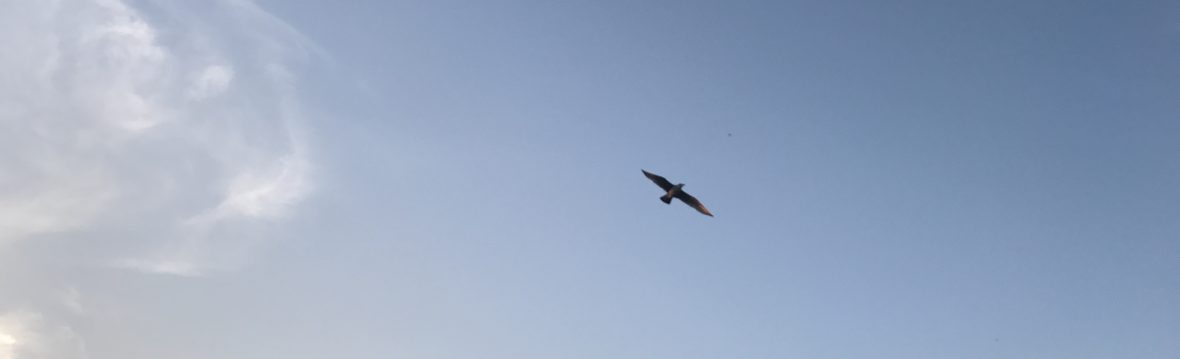
Watch out for him in the morning, for he’s the friend of light and the colourful kite dancing in the blue sky. 

With hope and peace,

Nahla

personal thoughts

Reading Books Can Be Just Like Meeting People


Well… finally, I’ve finished  the book I was reading over the last month.

By the way August was  a good month with all its hustle and bustle. It’s the month of the warm, bright summer and long off work, off school break. It stirs in you that unique mixture of memories; your old time school holidays, family gatherings, and some special celebrations. Don’t you love it, even with its shocking heat waves?

Now,  back to the book: The Ambassador by Henry James. Or is it James Henry? Oh my… my brain can’t even digest the man’s name. So, this is the book that gave me a headache every time I opened it over the last month, and a few days from the month before. Have you read it? If you have, and if you enjoyed it then mes félicitations! And if you haven’t or are thinking about reading it, please go ahead, and don’t reference my experience as an excuse.

I don’t intend to share a book review in this post, perhaps I will do later on my book review blog. What I’m sharing today is the thought that struck me after finishing it: how reading books can be just like meeting people.

Have you ever experienced those feelings when you meet people for the first time? Sometimes, you feel excited, relaxed, and comfortable. Other times, you feel totally the opposite. And sometimes, you feel nothing, just neutral. That’s all expected, and that also happens when you read a book. But there’s another kind of experience, something deeper than first impressions.

The book reminds me of how you can meet others and how, for no clear reason, you choose to challenge your feelings, silence your inner voice, and keep socialising… or keep reading. As time passes, you give yourself a chance; one, two, three, maybe tens, to find something mutual, something interesting, or even honest, but … you barely find any.

But, isn’t that, in the end, why you can congratulate yourself?
Why not?
You tried to reach out. You tried to understand. And, you didn’t judge the book before reading it all.

The effort is always worthy of celebration, isn’t it? 

With hope and peace,

Nahla

Just writing

Don’t Follow This Reading Strategy

I’m currently reading one of Henry James’ books. As usual, I knew about the book while reading something else. I read its description on Goodreads and decided to give it a go. The story is simple, and the characters are few and not complex.

Things seem good so far, right?

No, it isn’t.

I started reading the book last month, and I’m not even halfway through. Perhaps I picked it up at the wrong time. I mean, it’s the summer holiday, with so much going on. But no, that’s not why it’s taking me so long to finish.

The prose is my main problem. I can’t enjoy reading it. Whenever I reach an interesting part, the author starts analysing and exploring another point. Still, I keep reading, hoping the book might surprise me… or I’ll finally give myself permission to stop.

So far, nothing has happened, and that’s why I advise you not to follow my reading strategy because it’s just stubborn.

I usually read at night but this book makes me yawn, and my eyes grow tired  before bedtime. I decided to speed up the process by reading during the day, but my patience wore thin. There’s always other chores to do, and reading this book will be the hardest. I tried the audiobook, but my mind kept wandering to many things except the book. And then, I thought: maybe it would be better to make some change. So I picked up another book, hoping to return to the first one with fresh eyes and some interest.

As I was searching for another non-fiction book, I came across a medical one titled Love Your Disease. Have you read it? It’s a bit like “love your enemy,” but is that even possible?

By the way, it is not totally medical with scientific terms and theories. It’s quite readable, with real-life experiences shared by a doctor about his patients. But since it’s not fictional, and I am not a physician, I feel I can neither accept nor discuss the book. In short, after skipping so many parts, I decided to stop reading it.

So, I’m back to James Herny. No, it’s Henry James. And, I’m just as determined to finish the book as I am to never read another by the this author.


With hope and peace,

Nahla

personal thoughts

Passions vs Affections


Does it ever happen to you that, while reading, you pause at certain words and wonder not about their meaning but about their differences? In other words, you know which word to use,  but you still wonder why another can’t fit in this context or that situation.

Am I getting a bit philosophical?
Of course not… I’m just getting a bit speculative.

Let’s consider, for example, the words: passions and affections— the cousins from the sensitive emotions family. These two cousins are close in blood, though distant in behaviour. Isn’t their difference obvious, even in the very sound of their names?

Try and voice the two words.

Do you notice the difference?

Do you feel the strength of passions and the delicacy of affections?

By the way, both are healthy and important feelings for the well-being of humanity. However, each follows its own path.

Do you know why?

Affections are mostly hidden—quiet and deep— within the heart. Kindness, tenderness, and warmth are just a few examples of how affections work. They are private, gently whispering to awaken what’s good and pure inside us.

Passions, on the other hand, are strong, fiery, and bold. Excitement, temper, and recklessness are some examples of how passions work. They scream, shout, and might even fight to arouse and fuel the fiery emotions within us. Lust, in its many forms, is fed by the reinless passions— isn’t it?

Perhaps this is why affections live long and strong, while passions, in most cases, are extinguishable and short-lived.

And at the end of a long day, when eyes are tired and heavy with sleep, it’s the whisper of a genuine prayer, a kind gesture, or a gentle touch that weaves our happy dreams.

With hope and peace,

Nahla

Books

Have You Read This Book?

I’ve just finished reading A Passage to India by E.M. Forster. It’s a well-known novel in the history of fiction, regarding orientalism, imperialism, and colonisation. You may have read or heard about it. As for me, I honestly came across it while reading another book.

The book reminded me of Edward Said— have you ever come across this author? I hope you have. I read two or three of Said’s books while studying for my postgraduate degree in Religious Studies. You might wonder how I went from my undergraduate degree in English Language to Religious Studies, but that’s a story for another day.

Now, back to A Passage to India. I am not going to review the story— there are already enough, in case you’re interested. I’d just like to share a thought that struck me while reading it.

True friendship can never exist where pride and prejudice surround it. Such an atmosphere cannot creat and nourish a healthy relationship. Mottos become empty words when superiority and inferiority are hidden behind the nice, smooth facade of so-called communication.

We are created different—in colours, shapes, tongues, and even beliefs. So why does one side decide to change God’s plan, or worse, play God in this temporary life?

So, for example, how can a man travelling by aeroplane be considered more civilized than another by horse? Why is a scientist seen as more civilized than a Bedouin? And why is a millionaire thought to be more civilized than someone earning a modest wage? And, as if that were not enough, this so-called the “civilized” often seek to dominate and humiliate those they call the “less fortunate.”

This is simply what A Passage to India is all about. Friendship that seems possible at first, but cannot last because it grows in a world full of pride and prejudice. That world doesn’t see differences as diversity—but opposition.

Ironically, the author himself tends to present things more as opposites  than as differences—framing them as superior and inferior, or, to put it more nicely, as the fortunate and the less fortunate.

I think Forster merged this duality unintenionally because he belonged to that generation. Even if he struggled with some internal conflict on this issue, he couldn’t overcome it—just like Fielding in the story. Besides, both were atheists, and their views seemed to slip away from the concepts of divine mercy and justice, which might have offered them a different perspective for building a true friendship.


With hope and peace,

Nahla

Books

I think that’s enough!

Today I made up my mind that I have read enough of Daphne du Maurier’s books. My reading journey with ber books has started last December and continued until last friday. I read about ten of her works, both short stories and novels. I enjoyed reading them all, but one of my reading techniques is to follow my intuition. And today, mine says it’s time to read different books for a different author.

Don’t you agree that changing geners can enhance your imagination, polish your literary talent, and broaden your knowledge? I do agree, but of course, that depends on your literary preferences and style

Now, it seems it’s time to make a fresh start and read a new author. I have a specific one in mind, and I hope I won’t be disappointed. So, this month will be dedicated to non – fiction philosophy and wisdom books.

By the way if you wish to read my reviews on Daphne du Maurier’s books, please check my book review blog.  Here’s the link.

https://nh825.wordpress.com/

With all the best wishes,

Nahla

Just writing

Let Your Mind Wonder


That’s the title I read in some news yesterday (not sure whether it was for scientific study or just a piece of advice).  The post seemed to recommend letting our minds wonder as a healthy practice to help us relax. Honestly, I only read the title, and the first few lines, because my mind didn’t let me read more. He already started to wonder, thinking about my own dilemma with daydreaming.

I believe that if you love reading and writing, you will definitely have your share of daydreaming for both based on imagination. When you read you imagine the story, and when you write you make up a story. It’s all about imagination, about letting your mind wonder. However, the dilemma arises when things become a bit too much, causing an embarrassing state of lack of concentration.

Imagine you’re deeply absorbed in writing or reading your book, feeling the narrative’s conflict. Then, all of a sudden, you have to pause because other duties call. You think your mind has paused as you engage in your chores. Sometimes it does, but other times it doesn’t. That’s when your dilemma of lack of concentration begins.

Now, if you imagined the first scenario, you can imagine this dilemma in another part of the world, with someone getting ready to pray.

She puts on her prayer dress, spreads the prayer mat, and steps on it. After the first few moments of good concentration, her mind starts wandering back to the blog she was thinking about writing. Not only wondering, he’s giving her some ideas. She blinks, trying to drag him back to her prayer.

‘That’s not me, that’s the devil whispering,’ her mind plays the innocent, diverting her to a new distraction. ‘And oh, yes,’ she agreed for who else could she blame if she couldn’t blame herself? Now her mind starts wondering again, thinking how to send the devil away.

‘You’ve never cursed before,’ her mind reminded. She almost giggles imaging someone cursing while praying.

‘Let me think of a different tactic.’ Her mind wonders again, this time to find a solution. ‘Here it is: Instead of whispering , read the verses loud.’

She does, but this idea, like a magnet, brings her family around. Of course, they wonder why she’s praying out loud. Is she’s trying to get their attention? Now, though her gaze is down on the prayer mat, her mind let her imagine their worried eyes on her.

Only God knows how she manges to hold back her laughter! Finally, the prayer is done, but for how long, and how accurate? She doesn’t know. But there is one thing she is sure of: God is Merciful and although we won’t be pardoned for abondoning our prayers ( Salaah), we will be pardoned for the unintenional distractions.

See, letting your mind wonder could be a good excerise for relaxation,  mediation, and creativity, but things should be under control. Otherwise, your life would be nothing but an imaginary story.


With all the best wishes,

Nahla

Just writing

Panacea

Isn’t it a wonderful word, full of magical solutions?

I believe it is. 

For example, reading can be your panacea for good company, walking for excerise, sleeping for exhaustion, travelling for boredom, etc.

But what is the panacea for good quality writing?

All of a sudden, I started wondering while reading my book last light. I added a bookmark to the page I stopped at and decided to write down my first thoughts the following day.

And here I am today, completing the post while Blue, my bird, stands before the screen, watching my fingers tapping the keyboard. He’s feeling miserable and restless, because Sky, his mate, has been poorly for days.

So, back to Panacea and good writing.

First of all, I thought it might be to write everyday. You’re really amazing if you’re doing this. Sometimes, I wish and try to do this too, but I don’t think that’s my panacea for good writing.

Second, I thought it might be reading. It’s said that the more you read, the more your writing improve. That’s so true, and it can be a good step towardes achieving good quality writing especially if you, like me, get deeply engaged in the book you’re reading. In fact, that is very beneficial when it comes to writing book reviews.

Third, I thought of the time and the place. Perhaps, if you fix a certain time and place, you will feel more oraginsed and committed, and create your best piece. That can be another good step, but it’s not a practical option for everyone, especially those with other priorities.

And then, I thought of Inspiration. It is like a magical pen with mystical ink that turns thoughts into flowing words. It isn’t limited to a special time or place. You can be inspired by a quote, a picture, an adage, a memory, a dream, a daily prompt, or a post by a talented blogger. The most special thing about inspiration is how it makes writing flow – makes it easy and unique.

Is inspiration your panacea for good quality writing?

It is for me

With all the best wishes,

Nahla