This is one of the most special and poetic expressions in the Arabic language.
Isn’t it beautiful?
And what a brilliant choice to use talk and see!
When you talk, you simply… talk, spontaneously, casually, using your voice, your feelings, your words. In other words, when you become you, the other can hear, see, and know the real you better. Whatever you are and whatever experience, profession, or talent you have, the other can’t see any of it until you talk.
But things doesn’t rely only on the one who talks; listeners have their important share too. A listener’s good eyesight and hearing are not enough if they really want to see the one talking. To really see someone, is to use your heart. That’s why the blind and the deaf can see you as well as anyone else.
Not everyone who listens, truly listens. Have you heard of this saying before? May I make this tiny addition: Not everyone who listens, truly listens —or truly sees.
Even when you read a story, you come to know the characters better through their dialogue. The more they talk, the more you see them, unless you’re not interested in the book at all.
By the way, don’t you agree that writing is one of the most creative and artistic ways of talking?
I do—for some people, talk flows more in writing, and see deepens more in others’ writings. These are the same ones who believe talk lives in writing, and see broadens through others’ writings.
That little, talented bird with a beautiful voice that is music itself. I’m not sure I have seen one before, but I imagine he must be among those nesting in the nearby trees.
Well … why did he crossed my mind today?
Simply because of the book I have just finished. The Song of the Lark, which, by the way is not about the bird species.
Can you guess what it symbolises in the story?
It’s not hard to guess for birds, in most cases, symbolise freedom and ambition.
There’s a poem about this bird, but I haven’t read it yet. Perhaps another time.
Away from the book and the poem, doesn’t the bird, with its unique name, feel like a musical poem? Full of energy and happiness? Beside it’s a migratory creature with an adventurous spirit.
Watch out for him in the morning, for he’s the friend of light and the colourful kite dancing in the blue sky.
Isn’t it such an elegant word with supreme qualities?
Isn’t it special given to the special?
But praise is not for everyone or everything. Even your beloved ones cannot receive your full praise because they are humans and humans are … human. So, the first and foremost praise is always given to the Almighty. And how simple, pure, and beautiful it becomes when offered from the heart.
We humans love praise, but things may get out of control or even become abnormal.
Starting with ourselves, don’t you entrain yourself with a little praise now and then. Well.. I do, of course, not in public but … quietly, mostly to myself, and sometimes with my family. They usually laugh, but then admit it’s a good tactic for loving yourself.
But when your self-praise begins to puff up with conceit, you cross the limits and enter the dangerous phase of greatness insanity. So, be careful.
Then there are your beloved ones. Out of love and most of the time, you see them, or what they are doing as worthy of praise. How true and funny is this Arabic saying: the mirror of love is always blind.
But can you praise someone even if you don’t like them? I think that’s how we prove to ourselves that we play fair. For example, you might praise someone for their beauty, intelligence, etc, even if you cringe every time you see or hear about them, as if you were eating a sour lime. (By the way my mouth’s already watering for I used to eat limes like oranges.) But that’s fine, because you’re being sincere to them and to yourself.
Now, what about praising someone you don’t like for qualities they don’t have? That’s nothing but hypocrisy. Unfortunately hypocrites deform and misuse the very connotations of praise. They grow and spread like weeds, showering those who deserve nothing, everything. Ironically, they themselves would never trust any praise.
Octobers are special, colourful, and definitely cold.
Their days grow shorter, and their nights stretch long.
And you sleep more.
You sneak into bed by eight pm, and hiding under the covers until seven am.
Their meals are another story.
For of course, you eat more.
Roasts, soups, cakes, and pies.
And from now on your hands always hold a hot drink.
Tea, coffee, and herbs—all steaming with the scent of October.
This tenth month on the calendar, doesn’t it remind you of something?
Just look back and scan the months behind you, and see how far you’ve come and how many chances still await to receive and cherish before the end of the year.
If you could think of seven positive words to boost your energy at the beginning of this first cold month on the calendar, what would they be?
Can you use only the letters of OCTOBER, please?
Here’s my humble contribution:
Opportunities — They always exist, so never say never.
Creativity— Isn’t that what makes things more beautiful?
Thankfulness— Remember, there are others who can’t enjoy things as you do.
Originality— Nothing can beat it.
Blessings— They are abundant; just count them.
Enthusiasm—That’s the first push to make a good start every day.
I have, but that was many, many years ago in my senior school days. Honestly, I barely remember anything from my philosophy and logic classes save the names of these two famous philosophers. And, I do remember my teacher; she had such a sharp look and loud voice, which made no logical sense in a philosophy class.
This quote crossed my path today and stirred some old memories.
I don’t think I have shared anything before about my decision to join the humanities section for my final high school exams. Have I?
Back then, my teachers, surprised by my decision, told me I was choosing the easy path because I was doing well in sciences. But, simply put, and with a bit of alteration to Socrate’s quote: I know that I know what I wanted to study.
I could have followed most of my friends and joined the sciences section, but I didn’t share their dreams. Most of my school friends had their eyes and minds set on becoming doctors or engineers. Yes, those were the high aspirations for my generation, wrapped in glimmering prestige and the promise of steady, respected status.
But I loved languages and literature. I didn’t bother so much about geography and history. I found philosophy and logic intriguing. Years later, I can see how I made the right decision. But that’s the story for another time.
Now back to Mr Socrates’ quote. Of course the great philosopher wasn’t talking about life choices. He didn’t mean to encourage us to go astray under the “don’t know” banner. Nor did he mean this casual “I don’t know” that children nowadays use as an easy reply for any question. The poor man might have abandoned philosophy altogether if one of his students had given him that “I don’t know” answer.
Simply, he meant that the more you learn and know, the more you realise there are still other things you haven’t heard of.
In other words, be humble, be curious, and be ever learning.
This prompt is a bit hard… because … sometimes you have the thing and its opposite. And sometimes you think you don’t have the thing though others believe you do.
Got anywhere so far?
Simply, it’s like being optimistic with sunny spirit, but also having your own heavy, dark moments. Or being quiet with calm nature, but also having your own loud, rumbling explosions. Or when people see bravery in you, while you still hit the spider three times (or more) before moving it to its final destination.
But… what I appreciate in myself and what I believe is, indeed, a very valuable trait, is simplicity.
Complex, complicated and sophisticated feel too abstract, too demanding, and too vain to be part of my life. Even when I decide to make a change and welcome those fancy concepts for a quick visit, things go wrong, or boring, or fake. So, I’ve promised to grant them indefinite leave with no quick return.
Sometimes I wonder how the famous artist dared to use simplicity and sophistication in the same sentence: “Simplicity is the ultimate art of sophistication.” Of course he meant that it’s more complicated to live a simple life than a cluttered one. True. It really takes time to love simplicity especially if you are a complex person. But that’s the point. He should have used… elegance. Or better yet—modesty
What aspects of your cultural heritage are you most proud of or interested in?
The first thing that struck me as I read today’s prompt was something I truly like about Egyptians, something that can be a special trait or a characteristic that most of the Egyptians are known for. And you know what? Even after living abroad for so many years, I think I still have a bit of it.
Can you guess what it is?
It’s how they carry humour in their talk, how they simply crack jokes in passing comments, how they can lighten what is heavy and simplify what is complicated. To put it simply: how naturally most of the Egyptians can be both funny and witty.
They love to laugh, to spark laughter, and to cherish every laughing memory.
“Why aren’t you laughing? Afraid your skin might crack?” That’s how they react when visiting with someone a bit too serious
It’s always funny when we meet up with Egyptian friends and they try to joke with my children. My children smile which is a clear indication that they did’t get the joke. I stifle my laughter. I cough. I breathe. And then our friends repeat the joke.
My children turn to me: their faces wondering what’s so funny, and their eyes pleading for a quick explanation. I burst out laughing, not at the joke but at their reaction. And then they burst out laughing not at the joke but because laugher is contagious, just like yawning.
And this is one of the most well-known Egyptian sayings about laugher:
“Just laugh, no one’s taking anything from this world when they leave it.”
I believe we all do, but… perhaps some may say no, but of course they owe us some explanation or reason when they decide to shock us by their unexpected NO.
So, let’s remain with those who love flowers:
some plant them,
some pick them,
some sell them,
some buy them,
some are offered them.
And… some simply watch them.
Don’t you agree that the one who knows flowers best is the one who plants them? But who else can understand them so well?
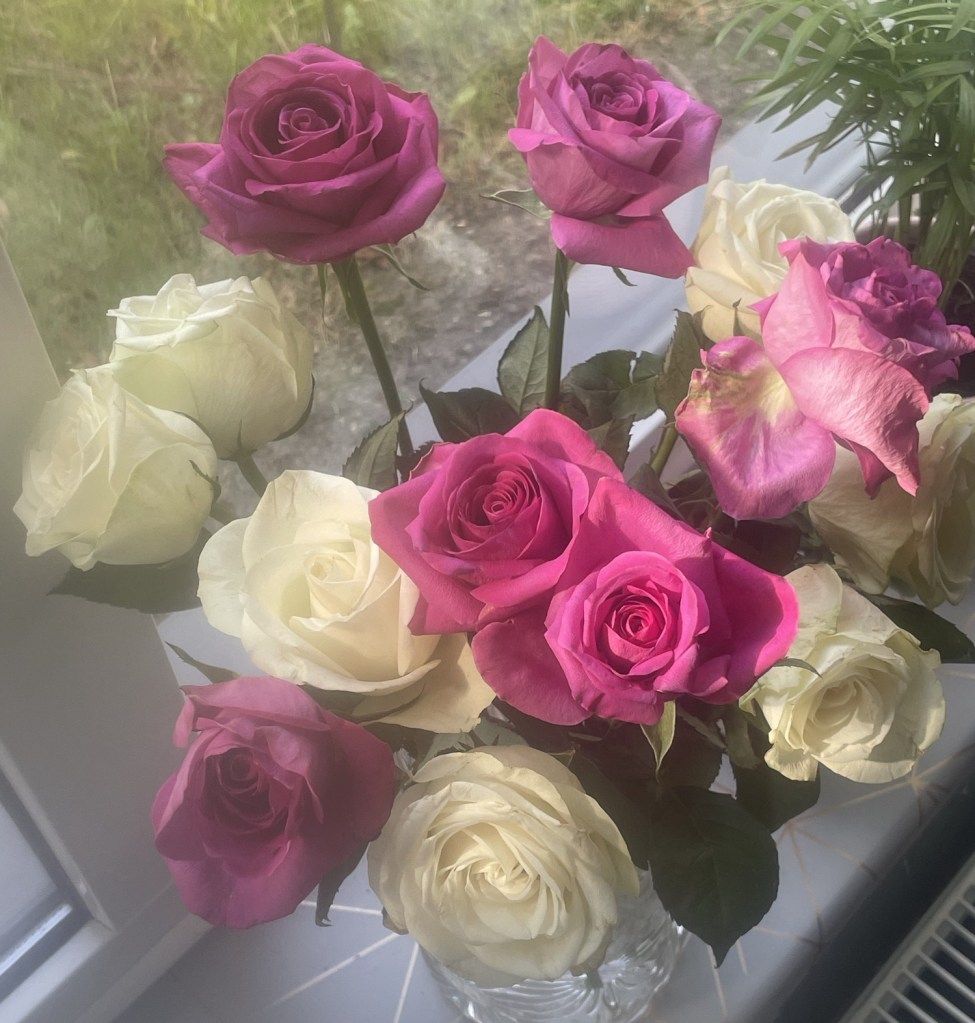
And… don’t you agree that the one receiving flowers is someone so special? Do you remember that bouquet you get on Mother’s Day, your birthday, your engagement, or your wedding day? Flowers are for someone dear. Someone remembered. And someone loved. Right?
As for the picking, buying, and selling that’s all business with sufficient knowledge.
Have you ever dreamed of being a florist, owning your own flowers boutique?
I had that dream years ago until the day I stepped into one of those nice shops. Since then, I changed my mind. Why? Because I found the place so humid and stuffed, and I can’t endure either. Besides… imagine a customer asking for a posh, sophisticated bouquet, and getting a simple bunch of roses instead. That’s how I would usually handle orders if I were a florist.
Now what about those who simply watch the flowers? Aren’t they just like birdwatchers? They are the ones who appreciate things as they are, where they are, and when they are. The sight of colourful blooms on tall trees, in small pots, or scattering across meadows make them smile, sing, or even dream. This doesn’t mean that flowers look dull in vases, or add no beauty indoors. They do paint a beautiful and cheerful image in every room. But, the thing is flowers look more alive, vibrant, and real in nature —their vast, open home.
There are some flowering branches beside a big tree in our front garden. Sometimes, I wonder whether they will grow into a tree of their own. They blossom in the spring with a few dark red roses. When I saw them, I want nothing more than to pick them and place them in a vase indoors. But then, I think … the branch won’t look the same every time I draw the curtain and gaze outside. The branch will look so plain, perhaps sad and lonely, without them. So I leave them happy outdoors, to keep me happy indoors.
Good deal, right?
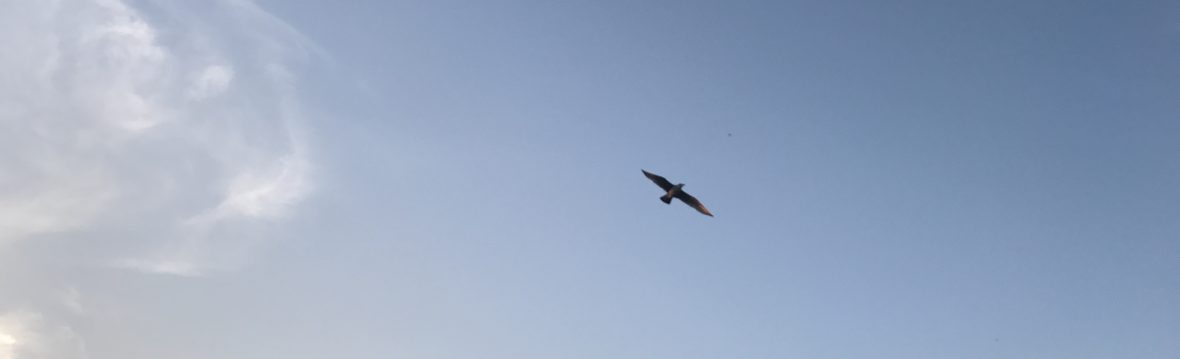
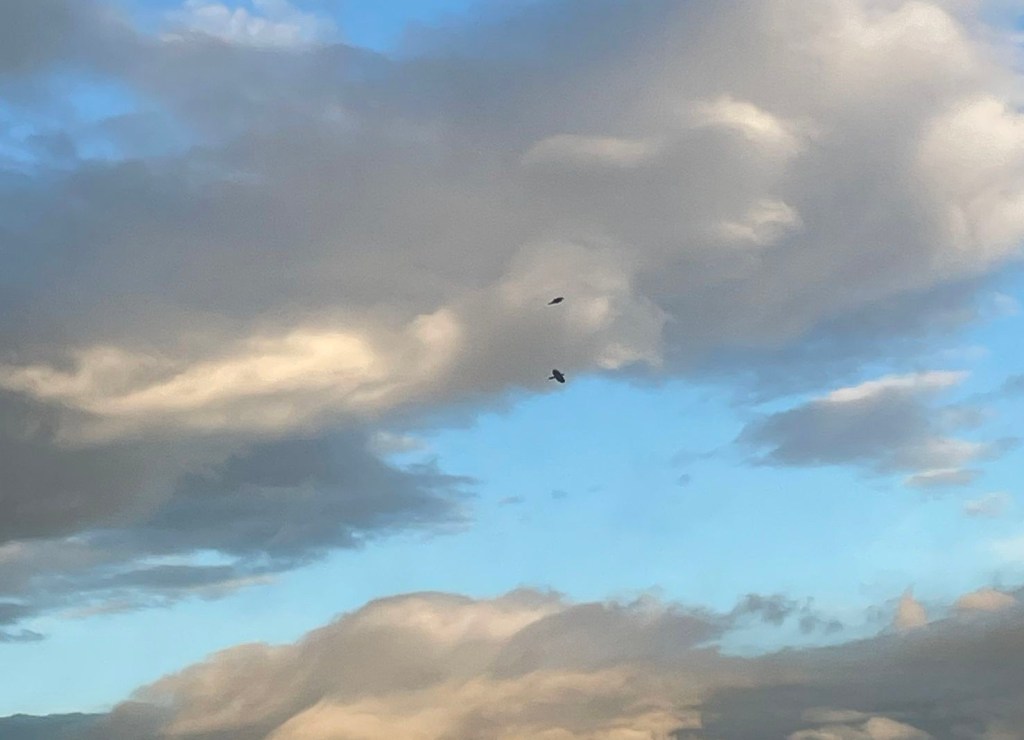
There is nothing more beautiful than watching birds spread their wings and soar high in the sky, and seeing flowers bloom, sway, and breathe everywhere.
Have you ever heard this quote: “Nothing happens, and nothing happens, and then everything happens.” I came across it in one of my reading books, and I hope I’m quoting it right.
Don’t you like it?
How many times have you been on the verge of giving up? Of letting despair and misery eat you up? Of bowing and kneeling before tyrants and demons? And why all that? Just because nothing happens. And nothing happens.
But then, Hope arrives and knocks on your locked door. He doesn’t wait for you to open it for he knows you have been waiting, suffering, and tormented for so long. He seeps into your dark, wretched soul like a gentle, warm breeze filling a dark, damaged home in a freezing night. That’s when everything happens: Prayers are answered, dreams come true, wishes granted, problems solved, and victory attained.
Isn’t that so beautiful, so encouraging—lifting the spirits of poor souls, awakening their self-respect, and strengthening their love for life?
There is a similar meaning in an Arabic poetry verse I once read. It says: “Things grew tight, and tighter, and tighter until they reached their tightest peak. Then, they began to loosen, and relief came.“ (This is my own translation.)
Are you are still reading?
If you are, may I ask you to think of the english quote, or the Arabic verse, in a different way?
Did anything come to your mind?
Let me give you an example to help.
Imagine, just imagine, you’ve been… God Forbid, a thief or a murderer or even a scammer your whole life. And nothing happens. And nothing happens. And, one day, you hear knockings at your door.
Hope is not the visitor this time. It’s Justice crowned with her royal, majestic halo. She’s the one who’s been waiting for so long. Finally, it’s time to make you pay. And then, things happen. But, instead of the gentle, warm breeze, it’s tsunami rushing to wipe you out, and reclaim everything that was never yours.
The interpretation is the same in the Arabic verse, with a slight difference. This time, it’s the culprit who tightens things with every deed, inhumane ones, of course, chasing success, power, and protection. He climbed to the tightest peak of pride, power, and false security. Then things happen. Tight things burst, don’t they? But relief doesn’t come. Only torn pieces remain this time, bringing nothing but suffering, humiliation, and regret.


 Pure and Simple