daily prompt

Dinosaurs: Bring Back or Send Over

If you could bring back one dinosaur, which one would it be?

I don’t know why, but I’ve never been interested in dinosaurs—perhaps because of their scientific names, with their long, complicated spellings and pronunciations, which could give one nightmares.


Thank God they went extinct millions of years ago, for we literally have such an abundance in human clothing across the world.

Don’t you believe me?

But of course you should.

Haven’t you heard of the most  advanced cloned versions of dinosaurs?

The Powersaurs, Moneysaurs, Scienceosaus, Mediasaurs, Idiotosaurs, and others from the Humanosaur family. Actually, the Justosaur is also part of the family, but unfortunately, it seems quite powerless and alienated.

See, it doesn’t make much sense to bring a dinosaur back. But… maybe a sample of the cloned version could travel back in a time adventure set millions of years ago. Back then, they might learn the truth—the scientific lesson they seemed to have missed at school: dinosaurs and humans didn’t co-exist.

Now, which is better: to bring one back or send one over?


With hope and peace,

Nahla
daily prompt

How could you give up this treasure?

What are you most worried about for the future?

Privacy. That’s the most valubale thing I believe we should all worry about.

Privacy. A precious virtue that was once treasured— before the madness of social media, before having cameras on smartphones, before homes became more glass than brick, before fashion meant wearing less than more, before movies and dramas with different ratings became not that different at all, before crude language and obscenity were regarded as comedy and entertainment. The list of “before” can go on and on, and it is really scary.

No boundaries mean no privacy, and no privacy means no morality, and that all leads to chaos and madness—just like our today world. The more you expose, the more popular and ‘normal’ you become.

But, don’t we feel sorry and sympathise with the insane because of their mental deficiency?

Of course we do. We would never blame, judge, sue them for their wrongdoings?  They are pardoned by both divine and human laws because they can not differentiate right from wrong, private from common.

Isn’t it strange how sane humans feel pity for the insane, yet behave the same— and even worse, expect the same pardon?

You know what? This kind of contradiction doesn’t even exist in the animal kingdom.

Isn’t your privacy something to value, to protect, and to worry about in this all-open, all-permissible digital world?

Without privacy, you are just like anyone, but with privacy, you are yourself.

With hope and peace,

Nahla

Just writing

A Taxi Without a Driver!

That would be so funny!

I’d love for eternity if I ever got into one. But even if you gave me a fortune—I wouldn’t.


Just magine getting into a car without a driver—yet everything works perfectly. You hold your breath for a few moments, wondering if you’re travelling to space?  The vehicle is luxurious, comfortable, and incrediably smooth. You can’t believe it’s already gliding down the road. Before you know it, you’ve arrived at your destination. You get off and walk away, wondering if it was just a dream.

Perhaps the driver’s seat wasn’t empty after all. Perhaps it wasn’t just air filling the space. Could there have been a driver wearing Harry Potter’s invisible cloak? May be, you thought for anything is possible nowadays, right?

Some people might see that as a great emerging tech idea for safety— a smoother, quicker kind of public service. Wow. They argue that this invention could reduce crime, accidents, and other unethical issues. But so far, many of these  revolutionary technologies have been causing more chaos, more moral, physical, and psychological problems like ever before.

Have you ever thought about how these utopian endeavours could affect our senility, our intelligence, our social and emotional abilities, our self-esteem, and our sense of existence. Are these qualities worth nothing?

There’re loads … millions … and more faults in human beings than one can imagine, but at least we are visible, we are real, and we exist in abundance.

Unemployment and homelessness are major problems everywhere—so why make things worse by cutting more jobs, more wages, and more lives?

And then, they talk about some imaginary heaven with high rate levels of stupidity, violence, and poverty.

Have a safe drive,

With hope and peace,

Nahla

daily prompt

Can You Make a Guess?

What’s the oldest thing you own that you still use daily?

What’s the oldest thing we might have in our lives? Even if we’ve only been in this world for a few years, what would be our oldest possession? My mind wandered, but not for long.

Can you make a guess?

Want any clues?


But that’s easy to figure out— just search through your important documents, and you’ll find it. It might be too old, but don’t worry about its age — some people, even children, grow far older than their actual years in this world.

Now, got it?


Fine. That’s the fully registered and signed document that welcomes us as newcomers to this big,  yet actually small world.

Our birth certificates!


This percious document, kept safe and sound, marks our existence as human beings. This precious document has our names, parents’ names, our gender, our birthplace, our country, and our birth date. It is the first step in our history, launching our journey through life while adding more to our resume.


Isn’t it a big shame that in the history of this “civilized” humanity, there have been people and children who have been deprived of having or keeping this simple, precious certificate because of injustice and savagery?

Can you believe there are children dying in this world without receiving this warm welcome into life? Without having this basic right to a birth certificate?

Are you still watching the news?

If so, be grateful—and remember that your birth certificate, just a paper-and- ink document, is a treasure; a dream for many innocent souls.

With hope and peace,

Nahla

Just writing

Be a Wolf, Not a Donkey

That’s a father’s advice to his children that I came across as I was scrolling through Instagram.

I paused for a few seconds, staring at the post—perhaps you would do the same. The father says: Better to be a wolf that everyone hates than a donkey that everyone rides.

Honestly I believe this father has his own philosophy, but I couldn’t help but set aside his advice and think about the differences between the two animals. Please don’t think I’m  making any reference to the father for humans are not animals … perhaps … sometimes, metaphorically, some may be, if we live just to eat and drink.

So, wolves and donkeys belong to different categories, right?

Wolves are predators—they definitely eat donkeys. They’re aggressive hunters, social within their packs, and well adapted to their environment. Children hate wolves in fiction, and farmers chase them away to protect their livestock. And, there are some humans who hunt wolves professionally, seeking their soft, thick, and expensive fur.

Do you know that wolves within their own families do not hate each other? Actually, they care for, cooperate, and communicate well among themselves. Wolves rely on their prey. They hunt to survive—which is the ultimate aspiration of any animal life.

Donkeys are herbivorous animals. They’re domisticated farm animals. They’re humble, preseverant, cautious, and well adapted to their environment. In my culture, they are not described so kindly, though. If one is lazy, stubborn, or has an awful singing voice, they might be mocked as a donkey.

Donkeys love company and live in herds, which is why they look lonely and miserable when they haven’t others around. But they can also be aggressive—any prey can be when defending itself. They kick, lunge, and bite. Yet, humans don’t hate them, instead, they use them to their full capacity. And, don’t forget that donkeys too live to eat and survive.

Wolves can never belong to a herd of donkeys, and donkeys can never be part of a wolf pack. They both can live around humans, but humans always manage to have the upper hand with both.

So, wouldn’t it be better to live as a human—not a predator or prey, but as a sensible person with free will?

With hope and peace,

Nahla

Just writing

The Watching Bird

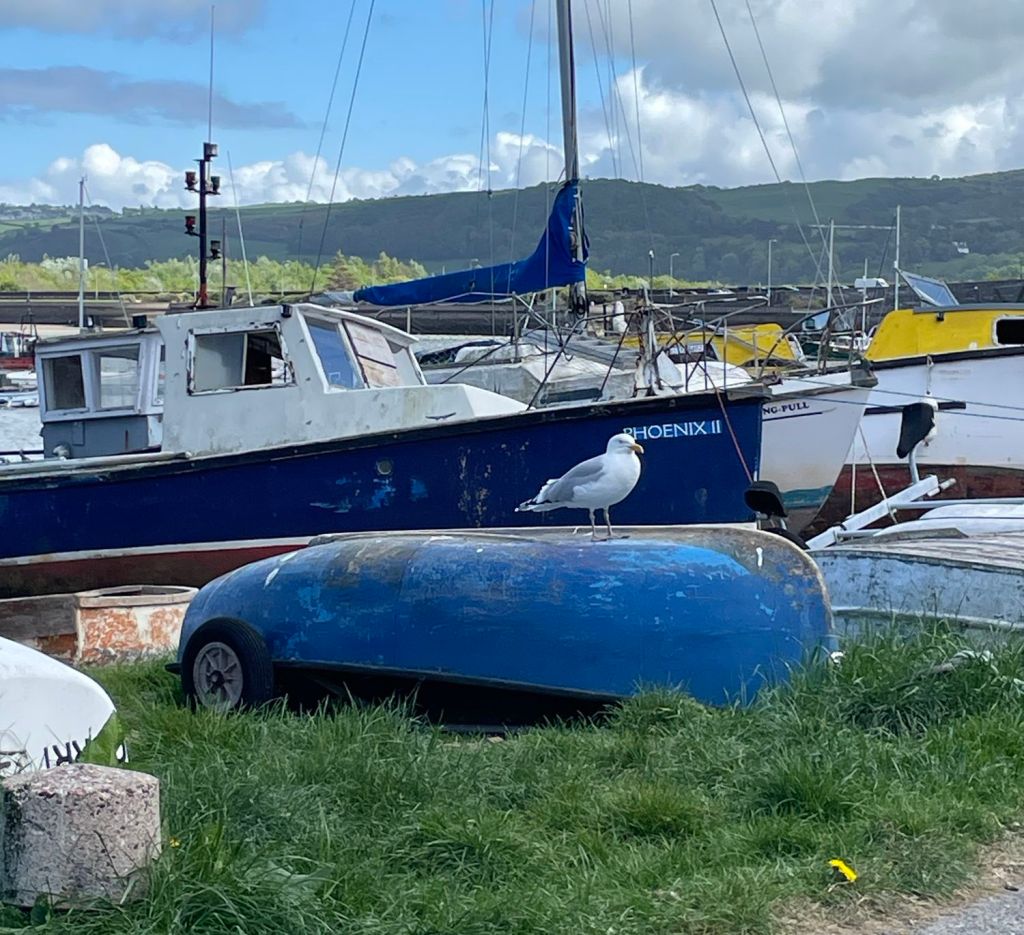
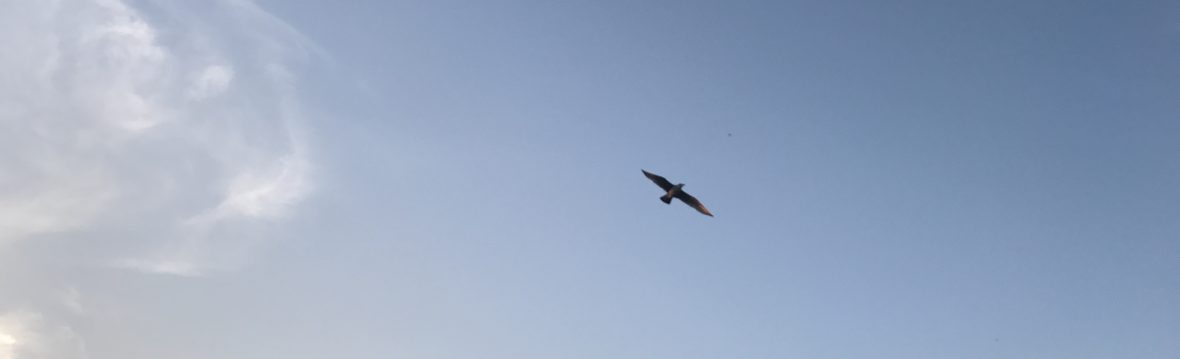
I smiled when I saw this gull as I took the photo. Can you see how confident and steady it paused as if it knew about photography and how to master the perfect pose. Perhaps it knows about social media, and dreams of becoming a celebrity among its own kind. That would be totally unbelievable!

As you see in the photo, the sea, the boats, and the clear sky (it was all blue later on) create a beautiful, natural background. But what you can’t see behind my phone camera is the hustle and bustle on the seashore. There were rows of benches lined along the seafront, and people sat there eating, talking, and basking in the sun. We were there too— my daughter and my husband enjoying their ice-cream, and I drinking orange juice. It was just then when I saw that dangerous bird, landing gracefully on that picturesque boat, and watching every soul around just like a hawk watching its prey.

Such greedy birds! Nature provides plenty for them—fish in the sea, worms in the soil, and more hidden beneath the sand. Yet, they are never satisfied. Always looking for the easy catch—human food. Excellent fishers and divers, these birds are professional at snatching and stealing others’ food. They seem to never have their fill—always watching, always wanting. That’s why I call them dangerous.

But they say humans are responsible for these birds’ changing of behaviour. They have spoiled the gulls by feeding them their own food. And that’s also why humans had tried to solve the problem by putting big sings that read: “Don’t feed them.” I saw these signs years ago, but not anymore. However, signs or no signs, the gulls have already adapted to their easy catch meal.

Aren’t there people who behave just like these greedy gulls? Those who have plenty but always set their eyes on what others have, what others eat, wear, and so on. The madness of social media has spread the danger of this phenomenon so badly. If gulls watch out of greed, unfortunately, some humans do the same, plus adding hate and envy.

Ironically, the sign that says: “Don’t feed them” could also apply to us—humans. But would we understand it?  Would we see that we, too, need to stop feeding our bad habits, unhealthy curiosity, and negative feelings toward others. 

Of course, we can—if only we’re willing to.

With hope and peace,

Nahla

personal thoughts

Natural Catastrophes and Humans’ Inhumanity

Natural catastrophes happen. At school, we study the basics about earthquakes, volcanoes, floods, tsunamis, storms, and more. Meanwhile, scientists have been studying, investigating, analysing these phenomena over the years. There’s no doubt that they have been doing their best — researching, trying to find solutions to help and save lives whenever disasters happen, but they can’t prevent them.

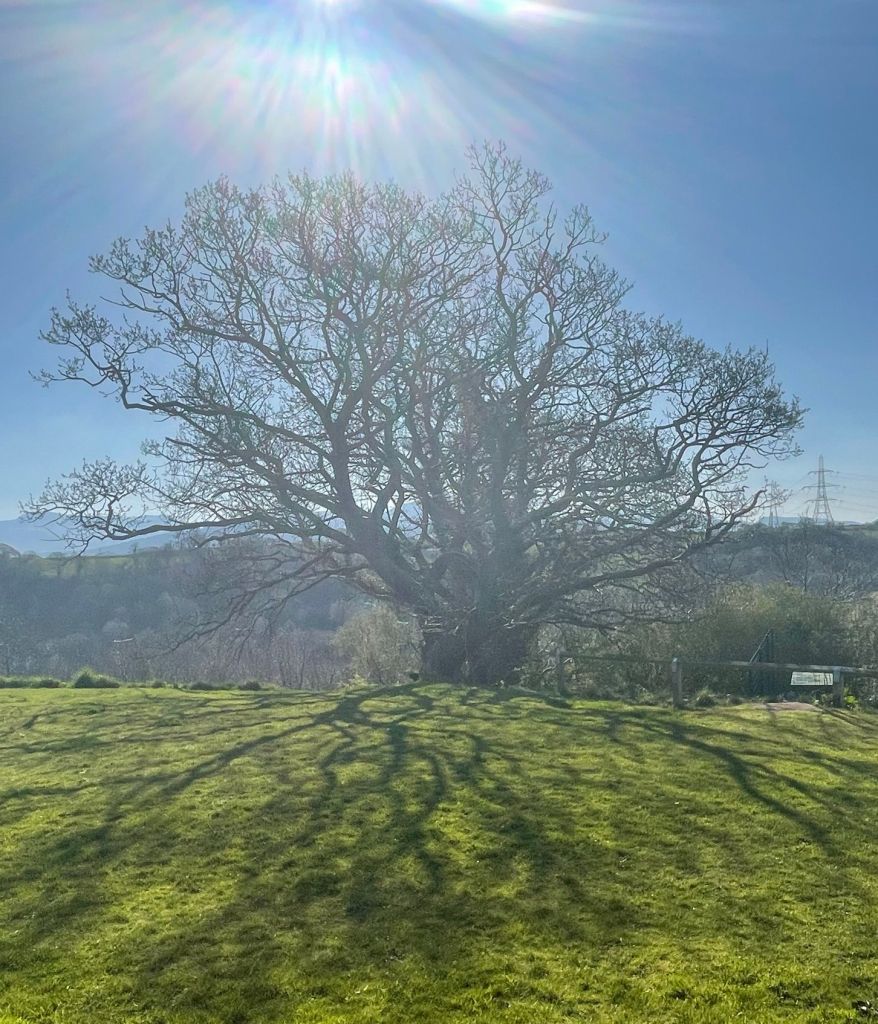
Scientists can create robots, smart technologies, and floating cities in the sky or on the seas, but they can never recreate this world, this earth, even this tree I am looking at through the window. And they truely know this fact. They understand that when faced with natural phenomena, their ulimate abilities and genius can mainly focus on predictions, solutions, and protections — there’s no way to prevent, challenge, or defeat them. Creation is not man-made, but divinely crafted by the One Creator.

It’s heartbreaking when you hear, see, or read about innocent  victims losing their lives, or those of their beloved ones, in any of these catastrophes. But as we say in Arabic, there are many causes of death, but death is the same. In other words, when one’s time comes, they will pass away whether because of a natural catastrophe or peacefully in their cosy bed.

Now, let’s turn to human inhumanity, which causes more damage, more cruelty, more bloodshed than what natural catastrophes ever do. Do you know why? Because human inhumanity destroys all noble and humane concepts that could help create a new beginning. During natural catastrophes, kindness, sympathy, and goodness are revived, spread, and shared by people around the world. However, in human inhumanity, the world takes sides. The news of innocent victims is suppressed, ignored, and marginalised.

Would you pay a little attention to that brief, end ‐of -the news addition about those innocent victims of inhumanity in other parts of the world, and at least remember them in your prayers?

With hope and peace,

Nahla


Just writing

Are We Long Lost Cousins

I stopped at this question as I was reading my book last night, but I wrote it down before forgetting about it.

Have you ever met a person who looks exactly like your reflection in the mirror? Isn’t it scary to meet someone who look exactly your double, even if they are your lost cousin?

I believe that’s not only scary but can also be dangerous.

That never happened to me, or anyone I know unless of course they are twins. And, even the twins I met, were not identical.

However, there is what people call the bond of likeness which doesn’t solely imply physical looks. I think that’s somehow can be like blood bond or soul bond.

The blood bond is comon in families’ similarities because of inherited genes. In my family, for example, though my sons look totally different, most people believe they look so similar that they are confused when calling them. Later, when they know them more, they see how they are different. Although my boys always laugh at these incidents, they do the same with my daughter and me, even though we look different. But it’s the blood that runs in our veins and how close we are together that gives others this impression.

On the other side, there might be the soul bond. That’s when you share similar thoughts, dreams, sense of humour, or even fears and worries with others. They might be friends, acquentences, or complete strangers, but Fate makes you cross paths together even once. In this case, you feel relaxed and happy to be in their company, as if you were somehow related.

However, back to the one – in- a- million possibility of having your double image, it would never be exactly you. We can’t just have printed copies of ourselves because we are not just photos. We are human beings with more than physical shapes. We’re created to be different, meant to be different. So, just in case you meet one day face to face with your double, be one hundred percent sure that you would never be confused because they would never be you.

Many books might have the same title, perhaps similar front cover, but never the same author, never the same content.

With all the best wishes,

Nahla