Isn’t The Karate Kid one of the most beautiful family movies?
I always remember Mr. Han’s powerful comment when he and Dre visited the most powerful Kung Fu youth academy in his town. After a few minutes, Mr. Han walked out and told Dre: “This is not real Kung Fu.”
If you’ve watched the movie, do you remember why Mr. Han was shocked and taken aback before giving that famous line?
Because real Kung Fu is mainly about self- defence with proper knowledge, clear rules, and, above all, a wise teacher. It can never be about bullying or humiliation.
And even if true Kung Fu loses a fight, it still earns a significant victory. Its defeat comes with clean hands, honourable values, and respected rules.
That’s why, as the movie shows, Kung Fu can be in everything we do, anything that nourishes peace and harmony, and helps prevent chaos and fights.
Isn’t the world today, unfortunately, witnessing the worst kind of Kung Fu— one that lacks knowledge, conscience, and respect to any rules? Ironically, it keeps proving to the world that this is not real Kung Fu.
Thank you, Mr Han, for teaching Dre, and us too, what real Kung Fu means, and for reminding us to pick it up and never say never.
Amity is about harmony, peace, and goodwill, wherever you find them. You might find it hidden between the lines of a book, or expressed as a simple thought in a post, or wrapped as a warm greeting in a text message.
But you know what? Amity is becoming rarer and rarer these days, but that’s not its fault. Noble qualities don’t go out of fashion. They don’t become extinct. They are just … not loud, not showy, and definitely not fake.
So, amity is one of those noble qualities that love to build, rebuild, and rebuild. In other words, if mistakes or wrongdoings break part of it, apologies and sincerity can mend it. It can wait, accept excuses, and even fix broken things, but not forever. It may lose its cheerfulness, its patience, but never its light.
And there’s something special about amity. It can melt lead, soften hearts, and overcome even the fiercest enmity.
Have you ever heard of the adage: “After enmity comes love?” By the way, it is well known in the Arabic world. But… honestly, I think this kind of transformation needs miracles. I believe in divine miracles. And, I believe only God knows which enmity can be softened into amity, and which heart is truly open to love?
September is a dear, special visitor who brings all sorts of weather in a beautiful gift box. And come rain or shine, its visit is always welcome, always endearing.
Today, for example, is windy, sunny, and a bit chilly, with refreshing drizzles expected later on. But no one huffs or puffs. No one is lazy. No one hides. Why? Because it’s September, bringing gentle vibes at the dawn of autumn.
Do you know what the big dilemma in September is?
It’s something we set aside during summer and bring out in winter!
Can you guess?
I think you got it right.
It’s the coat.
Shall I put it on? No, it’s warm. Yes, it’s grey and humid. No need, I’ll be back before it starts pouring. But it’s already pouring. This coat is useless. This one is too heavy. Grab it. Leave it. Why did I take it? I should have taken it.
This becomes a significant part of my family daily conversation before stepping out of the house throughout September.
But, doesn’t it add a bit of change and fun?
At least, you have the option and the full responsibility for all its consequences.
I don’t really know if it is a saying or a quote, but I’m pretty sure I came across somewhere.
But don’t you agree?
Don’t you respect those who can say ‘yes’ or ‘no’? Those who can choose to go on, to pause, or to withdraw? Those who know that ‘better’doesn’t necessarily mean ‘perfect’? And those who believe that ‘to run for your life’ is the only excuse to exceed the limits.
And you know what? Even imagination knows its own limits because, in the end, it doesn’t deny the fact that everything it creates is imaginary.
Dreams are different because the more limitless they are, the more destructive and selfish they become. People say, ‘Look ahead and follow your dreams.’ And some follow the advice as if it were a holy command. They look only ahead and follow one route — either straight or by taking shortcuts. Like competitive drivers, they floor the gas pedal, exceed speed limits, ignore traffic lights, overtake any priorities, and make every space as their own free parking zone.
To know and respect your own limits is not a weakness, not a sacrifice, and certainly not a defeat. It’s something like making a peace deal with yourself, a quiet agreement, not to overburden, torture, or destroy what’s already carrying enough.
Everything in life seems to have its own limits. Privacy, for example, is supposed to be all about knowing and respecting limits. There’s also genius, this rare, precious quality, which often understands the significance of limits better than anyone else. But, unfortunately, in some case, its main aim is to only challenge and destroy them.
The beauty of all this is that we have different limits, and they change even throughout our lives. Everyone can create their own heroic saga. What matters is crafting it within your own limits. And, if you choose to exceed the limits, don’t scapegoate others, don’t envy them, and don’t torture your poor soul anymore.
Now doesn’t “Blessed are those who know their own limits” make perfect sense?
Share a story about the furthest you’ve ever traveled from home.
Back then in Egypt, many years ago, when I was just a child, my family used to take two different holidays during the summer. Of course, none of them were abroad; that wasn’t even in my dreams.
The first trip was always to visit my grandparents and relatives in one of the most beautiful cities in Upper Egypt. The train journey took about six long hours. By long, I mean really long, not like nowadays, when time slips through our fingers like water. Still, I enjoyed every bit of it.
Our journey didn’t end with those six hours for my grandparents were living in a small village about a two- hour drive from the city. Sometimes we stayed in the city for a few days to visit relatives, but then we’d head straight to that small, simple village where my grandparents waited for us in their big, old house. We usually stayed there for around two months, but of course, after the first week, my father would take the train back to Cairo for he couldn’t be off work for that long .
Our second long trip was always to one of the quietest and furthest seaside cities on the western coast of Egypt. We always headed there around the first of September, when the weather used to cool down a bit at that time of the year. We stayed for only one week, since school started by the middle of the month.
We travelled there by coach and always with a group of family friends from Cairo. The journey was just as long as our train ride to the south. Excited about the sea waves, colourful shells, and building sand castles, I always looked forward to this holiday, and I never minded the distance.
Strange how, many years later, when my husband and I took our first flight to England, we thought we’d be too far from home. But in the end, that journey turned out to be actually the closest of all.
Things depend on how you feel about a place. The furthest can be the nearest. The furthest can be the most exciting, the most unexpected. And sometimes, the furthest can be home too.
Well… finally, I’ve finished the book I was reading over the last month.
By the way August was a good month with all its hustle and bustle. It’s the month of the warm, bright summer and long off work, off school break. It stirs in you that unique mixture of memories; your old time school holidays, family gatherings, and some special celebrations. Don’t you love it, even with its shocking heat waves?
Now, back to the book: The Ambassador by Henry James. Or is it James Henry? Oh my… my brain can’t even digest the man’s name. So, this is the book that gave me a headache every time I opened it over the last month, and a few days from the month before. Have you read it? If you have, and if you enjoyed it then mes félicitations! And if you haven’t or are thinking about reading it, please go ahead, and don’t reference my experience as an excuse.
I don’t intend to share a book review in this post, perhaps I will do later on my book review blog. What I’m sharing today is the thought that struck me after finishing it: how reading books can be just like meeting people.
Have you ever experienced those feelings when you meet people for the first time? Sometimes, you feel excited, relaxed, and comfortable. Other times, you feel totally the opposite. And sometimes, you feel nothing, just neutral. That’s all expected, and that also happens when you read a book. But there’s another kind of experience, something deeper than first impressions.
The book reminds me of how you can meet others and how, for no clear reason, you choose to challenge your feelings, silence your inner voice, and keep socialising… or keep reading. As time passes, you give yourself a chance; one, two, three, maybe tens, to find something mutual, something interesting, or even honest, but … you barely find any.
But, isn’t that, in the end, why you can congratulate yourself? Why not? You tried to reach out. You tried to understand. And, you didn’t judge the book before reading it all.
The effort is always worthy of celebration, isn’t it?
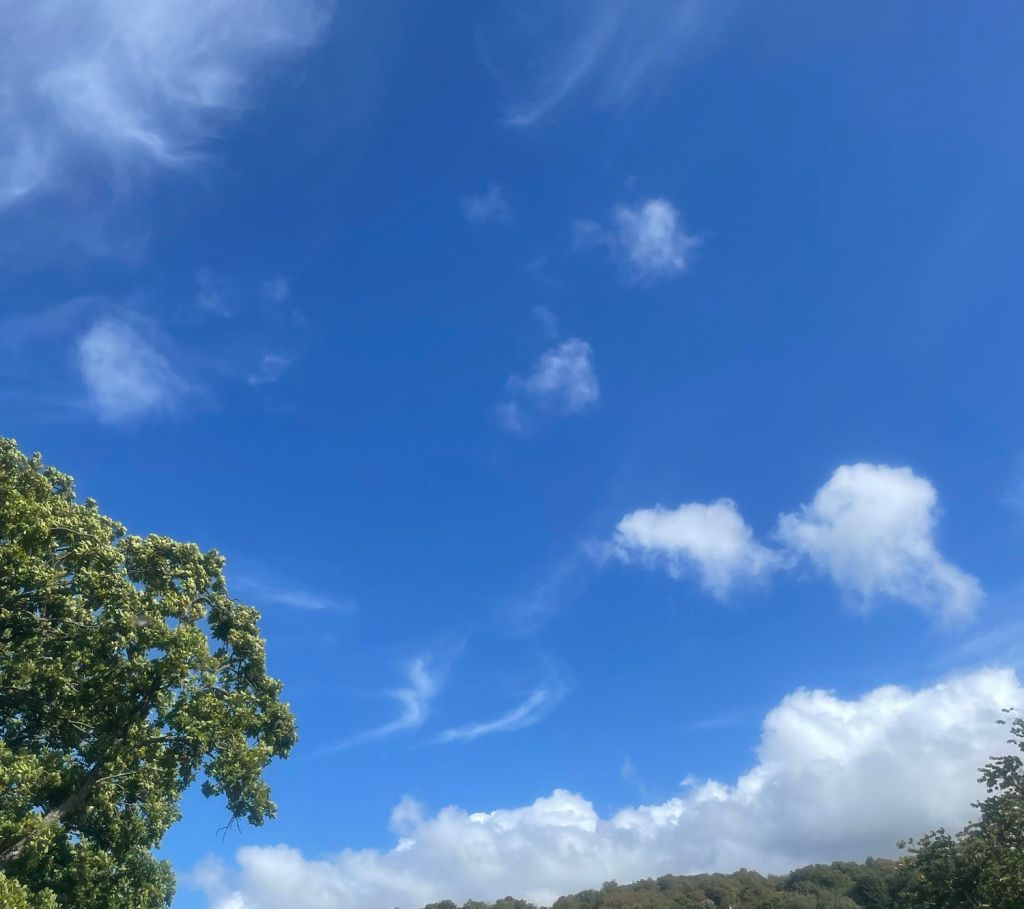
It seemed like a breezy afternoon with mild sunshine, a few fluffy clouds floating in the blue sky, and a gentle wind playing with the trees. Isn’t that the perfect time for a nice walk? That was my suggestion, which my husband approved, and my thirteen-year-old daughter surrendered to with a long sigh.
In a few minutes, we were walking down a long hill, for that was the plan to walk all the way to the end and then climb back up to our house. I was hoping I could bribe my family to stretch the walk a bit further, but I changed my mind, and that wasn’t because it started raining.
A few minutes after we stepped out onto the long road, the sun turned blazing, the clouds evaporated, and the wind changed direction as if heading towards a different destination.
As we walked, we realised that we were almost the only ones on the road at that hour. Oh my… even the birds had disappeared. The number of cars and buses passing by was countable. We couldn’t help but laugh until it struck us that it was time to climb back up the same long road. That’s when the real challenge began.
The merciless sun turned straight into our faces as if blaming us for choosing the wrong time for a walk. And one can’t easily evade the English sun. So we kept walking: my daughter dreamed of ice cream, my husband of a long nap, and I of sunceam as my face was already burning.
Halfway along the walk, we discovered a simple joy as some dry tree leaves joined us on the road. Their crunch beneath our shoes lifted my daughter’s mood, and she began searching for the driest leaves with the crunchiest sound. I found the idea both fun and soothing, so I joined her. Surprisingly, we attracted the attention of some hibernating neighbours who stepped out, curious to see what was happening.
Finally, we were home. I was pleased we had made it, my husband was already thinking about a second round later on, and my daughter felt sorry for my sunburn.
With hope and peace,
Nahla
P.S.
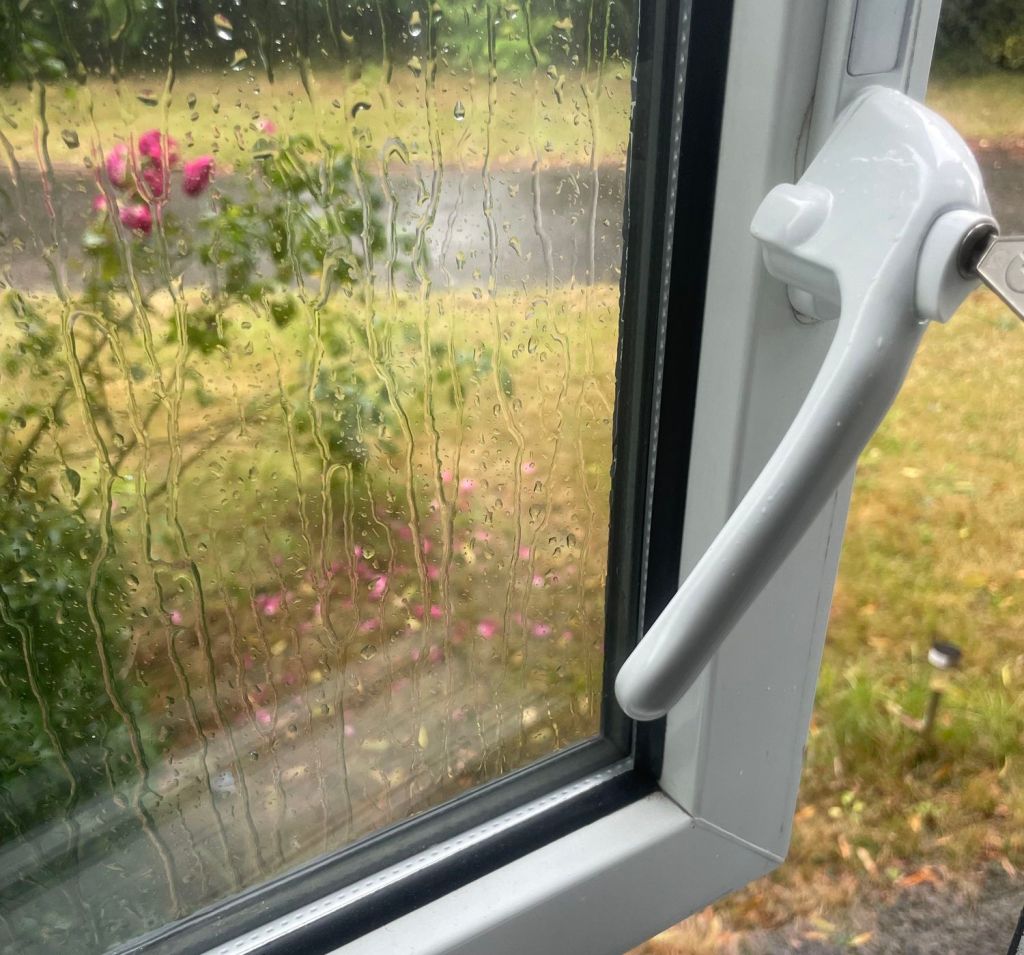
It seems the rain heard of our dilemma and decided to grace us in abundance!
Aren’t mercy and forgiveness some of the many divine attributes that we, human beings, need and even strive to show and receive to nourish a bit of this divinity inside us ? Of course they are.
Part of your being human is having a heart, a living heart with feelings and emotions. It can ache with pain and nourish with vitality. It can flutter with happiness and squeeze with sadness. It can brighten with love and darken with hate. And… it can find heaven in mercy and forgiveness.
Don’t people say, “Blessed are those with soft, kind hearts? And in Arabic, we pray for them and say: “May Allah bless their kind hearts and make heaven their eternal home.” I believe you’ve heard or repeated this prayer, or similar ones, one day or perhaps even just now.
Nowadays, these blessings are more precious than diamonds. Do you know why? Because mercy and forgiveness strive to survive in a world that is becoming so cruel, selfish, and superficial. can’t you see that?
Well… it’s a big problem if you can’t see how these divine qualities can create a piece of heaven both into your heart and upon this earth.
The desperate, the poor, the hopeless, the innocent, and even the sinner— all dream of finding mercy and forgiveness. And in spite of the hell that grows bigger and bigger day after day, mercy and forgiveness do exist.
They patiently carve a path through the hardest rocky walls. They spread light, warmth, and joy into dark, frozen caves. They save lives and feed goodness to empower hope and stand against evil and hypocrisy.
So … can you just open your heart, seize this opportunity, and offer some mercy and a bit of forgiveness for yourself and others? You will lose nothing, yet you may find your own piece of heaven gently fluttering in your heart.
Things might be hard, but they are not impossible.
Blogging is really fun. Well… that’s how I see it.
Imagine writing with no obligations, no deadlines, and no pressure. Just you, your thoughts, your imagination, and your piece of writing.
And … it’s also another way to hear others and be heard. Some voices are loud, some whisper. Some are bold, some shy. Some dramatic, some romantic. Some informative, some subjective. Isn’t that beautiful?
How interesting it is that, within this big collection of voices, you, in most cases, don’t know and would never expect to cross paths with another blogger. It’s even more interesting that you may have nothing in common. Your origins, cultures, religions, beliefs, and even your mothertongues might be totally different. The only thing that brought you together is blogging, which may also be for different reasons.
Isn’t it a joy to find peace in writing? Of course it is.
No wonder some people say that writing is a simple, soothing remedy for mental and emotional well-being. Perhaps it’s because the paper, or the screen you’re tapping on, just listens. It waits patiently until you finish your piece with no interruptions, no complications. Perhaps it’s because you can express yourself, your feelings, and your thoughts more freely in writing than speaking. Or maybe… it’s simply because you love the feeling of being a writer.
And finally, there’s a joy in reading others’ thoughts which can make you smile, laugh, cry, or even teach you something new … and maybe even different.


 Pure and Simple