
personal thoughts

They Don’t Cost Much


There are things that cost little but can brighten your day, draw a genuine smile on your face, and take you by beautiful surprise.

These things surround us in abundance, waiting just for us to notice and enjoy. Can you think of any? Please do.

Isn’t it interesting how these little things that make your day can be as much given as received? What could be better than kind words spoken fully and sincerely, without abbreviations? They are simple, free, and abundant.

Everyday greetings, wishes, and casual compliments are among the simplest you can offer to make someone’s day. “Thank you”, “Good morning”, “Have a good day” – all are free of charge, yet full of beautiful meaning.

Have you ever thought that there is a higher level of kind words, those that can fill your heart with peace and delight? These are blessings.

I once read that the word  “Hello” doesn’t exist in the Gaelic culture. Instead, blessings were used during their daily encounters. Isn’t this beautiful? This is so similar to my Arabic culture, where blessings are plentiful in our greetings.

May peace be with you.
May God be with you.
May God guide your path.
Be in God’s care and assistance.

There are loads of blessings, and do you know what, goodness in my form – be in words, deeds, or feelings – always returns to the one who gives it.

So, why give less when you can give more? After all, you will receive your great share of happiness. That’s God’s promise for both the giver and the receiver.

With hope and peace,

Nahla


Just writing

I Still Have An Accent

‘I still have an accent,’ an acquentence said one day, as we were having tea and cake at a café.

I told her that I didn’t notice that at all, as her English was so good, but she didn’t seem convinced. ‘I can’t wait to get rid of it,’ she insisted, making it seem like a big problem. I couldn’t help but wonder why it was a big problem.

Do you think it’s a big problem to have an accent?

Honestly, I don’t mind. Why would you mind if your mother tongue is different from the language you’re using for communication in your new place? In fact,  I find it interesting, different, and even special. Isn’t it the same when a native English, or French, or any other speaker speaks Arabic with an accent of their own tongue?

Over the years I have found that it’s hard for English native speakers to pronounce the ‘H’ in my name because it’s followed by ‘L’. Therefore, they drop the H, and instead of Nahla, they pronounce it Nala. I understand the difficulty, and don’t mind. We are created with different tongues, aren’t we? Isn’t that encouraging to learn and understand others?

In another context, a few years ago, while we were on holiday in Tunisia, I found it so interesting how their Arabic has a French accent. I really liked how different and unique it sounded. This is the same reaction I have when I meet Arabic speaking people from the Gulf region. Sometimes, it takes me a moment or so to understand, but I like how it sounds. I wonder how common it is to find people speaking the same language with different accents. Isn’t that what they call the tapestry of linguistic diversity?

The only exemption from this phenomenon is children. They are so quick, so ready to become bilingual with a fluent accent. I’ve noticed that in my own children, as well as other bilingual children. Perhaps, that’s because children don’t force it or overthink it. It just slips off their tongues so naturally and easily.

I still have an accent, and I like it.

With all the best wishes,

Nahla

daily prompt

Franco – Egyptian

What is your all time favorite automobile?

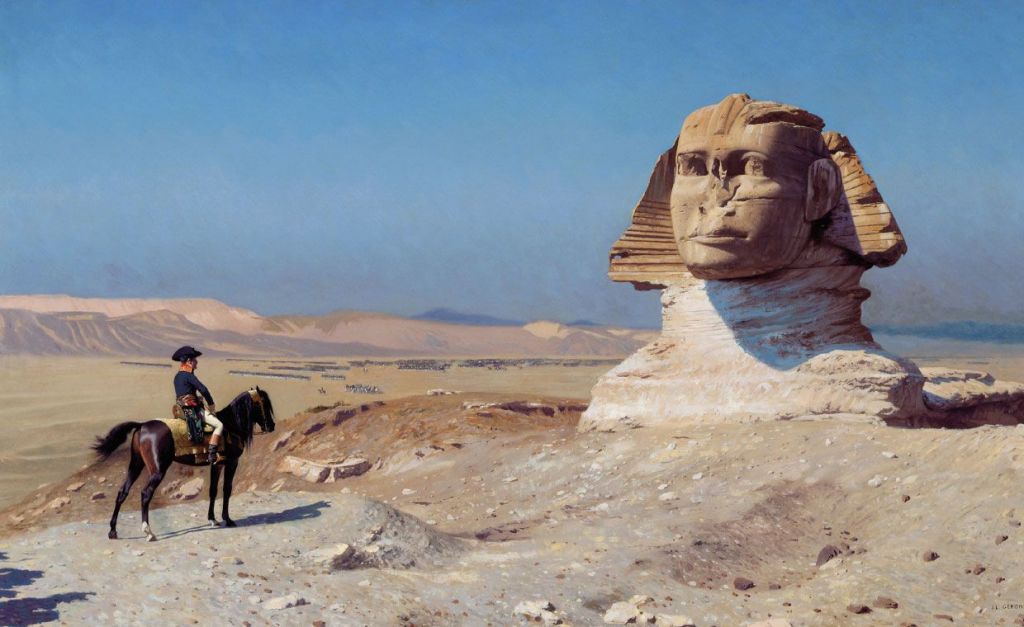
In Egypt until the sixties, the French language was common in Cairo and Alexandia. This Franco – Egyptian influence stared with Napoleon Bonaparte’s invasion of Egypt at the end of the eighteenth century. Though the expedition was a big failure and didn’t last long, mainly three years, it had affected the culture, including the language, mainly among the elite, literary, commerce, and political classes. Since then, French seeped into the Egyptian Arabic, though with some alterations and accent.

In our daily language, some French words easily slip off our tongues. Here are some examples: douche (shower), couverte ( blanket), pantalon (trousers), écharpe (scarf), etiquette, Garçon (waiter), and merci. The list, of course, is too long to mention all.

One might wonder how such change took place, if Napoleon’s expedition didn’t last long and was mainly limited to Cairo and Alexandria? That was mainly because of education. French missionary schools, mainly for Christians and Jews, were introduced in the main cities. But, later, they were open to Musilm Egyptians as well, and french scholarships were granted to Egyptian students. Scientists, politicians, and businessmen, became well acquintted with French systems and law. And then, as historians put it in our history books, modernisation found its way to Egypt.

Thanks to the word “automobile,” that this post turned out a bit historical. But isn’t it better this way?

À bientôt,

Avec meilleures vœux,

Nahla

daily prompt

Fictional characters

What is your middle name? Does it carry any special meaning/significance?

In stories, the name of every character is carefully picked according to things related to the role, the image, the place, the time …. they are representing.  Sometimes, we as readers overlooked this issue. We read and follow the sequence of the events and the development of the plot. But, I have learnt that writers do pay careful attention and time to the names of each character and they usually have a certain  significance.

In real life our names also have a significance, a meaning that in some cases match our own personalities. In arabic culture, people say  everyone has some share of the meaning of his/ her name.

That’s why I find it a bit confusing to have a middle name as the person, in most cases, will be called and known by just one. The other name will be left aside and known mainly in official documents.

With all the best wishes,

Nahla

daily prompt

A proverb

What is the last thing you learned?

No one is a prophet is his own land!

It is not that I don’t know the meaning of it but when my eyes fell on this proverb in one of the books, it was the beauty of the wording and the accuracy of its meaning hat I’ve recently come to learn.

By the way there this proverb has an equalivat in Arabic. It says; The light falls only on the strangers.

In both versions, the meaning is the same.

Haven’t you ever felt that you are more appreciated and honored elsewhere than in your commonplace?

I did.

With all the best wishes,

Nahla

Just writing

Dream high


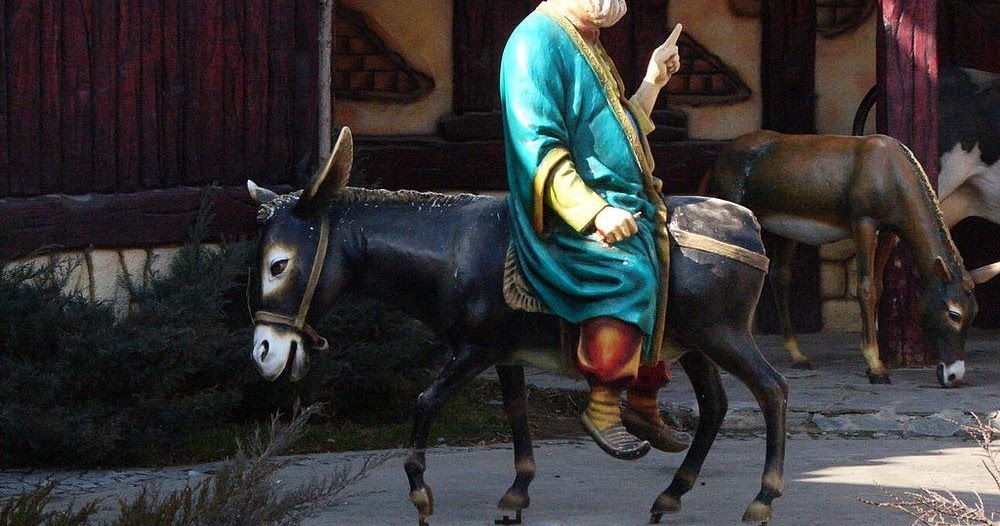
Image result for riding a donkey facing backwards


Once upon a time, there were three friends; they were poor, very poor, unnoticed and worthless. What they owned in their life was three donkeys and their job was to transport people, goods and luggage from one place to another. This was how they earned their living.
One night, after a long day of hard work under the sun of the Arabian summer. They threw their bodies over the smooth sand of the desert. The full moon and the shiny stars lit the dark doom; it was no longer dark and a beautiful sparkly night was all they can see.
One of the three men closed his eyes and said: ‘Imagine my friends that I become the ruler of this country; the sovereign majesty, make a wish?
His friends laughed and laughed.

The first friend looked at the dreamer and said: ‘you be the ruler, the sovereign. No way.’

The dreamer said: ‘Just imagine, man, you wouldn’t lose anything.’

The friend said: ‘ Ok, Mr dreamer, I want a house with a magnificent garden.’

The dreamer looked at the other friend and said: what about you?

The other said: ‘This cannot be. This would never be. A donkey cart plodder would never have dreams. We’ve no future, friend.’

The dreamer did not give up: ‘It’s me who imagine not you; this is my thought, my idea. Imagine!’

His friend got-up, collected his stuff, rode his donkey and said: ‘Let your guards carry me backwards on a donkey and let them announce to everybody that I’m a fool who didn’t believe that dreams can be true.

‘As you wish, my friend,’ said the dreamer.
In the morning the dreamer deserted his friends. He sold his donkey and looked for a different way to earn his living; a watchman, a constable, an officer, a member of the town authority, an advisor, a consultant,… finally, he married the deceased ruler’s wife and became the guardian of her eight years son. He ruled the whole country until the former ruler’s son was 16 years old.

Thirty years had passed since his friends laughed at him dreaming of ruling the country. At his prosperous days, he remembered his friends and ordered his guards to bring them.
His old friends were still donkey cart plodders but their friend, the crowned head, reminded them of their wishes.
The first was mad with happiness; he was granted a house with a magnificent garden.

The second regretted that wish ever since.

Ps, this is an old story in the Arabic history with real names and incidents but what I can remember is just the main plot; therefore, I have made some adaptations.

Dream high. Dreams can be true.

Wishing you all the best,

Nahla

Just writing

Our names

When we meet with new people, we sometimes ask them about the meaning of their names especially if their names sound new or odd. I am sure that my mother did not know the meaning of my name but she told me that she named me after a famous person that she admired at the time I was born.  My name was not that common at school or among our relatives and friends. There usually would be a maximum of two girls whose name was Nahla in any year group. Then, when I was in year 8 or 10, I had got my own Arabic dictionary from my school and the first thing all the girls checked was the meaning of their names.  It was the first time to know that my name means the first drop/sip of water one gets when drinking. I like it but I did not think that it has that special significance that others’ names have, e.g. beautiful, princess, night, morning, moon, etc. Then and after many years, when I was doing my Quran recitation exam, there was a lady registering our names. She looked very simple, old and funny all at once. She started giving every student a special prayer according to her name. And as soon as she knew my name, she said: “May Allah make you a fount of Knowledge!” I was a mother having two little boys at that time, and it was the first time to notice that my name is actually derived from the word ‘fountain’ usually of water but it can also be used in a reference to knowledge; It’s never late to learn! Before that incident, I used to like my name but after that lady’s prayer, I began loving it.

In the Arab world, we usually say that everyone has a share of his name. This means that your personality would probably reflect the meaning of your name. It’s just a saying! But why not thinking about it?

What about you? What is the meaning of your name?

Let me hear from you,

Wishing you all the best,

Nahla