
Philosophical musings

Deep: What Else Can Be Deep?

This is not about seas, oceans, rivers, or any natural or artificial forms of water.

By the way, don’t you agree that artificial rain feels fake in movies, but real in books? Or am I the only one who feels that?

But why wouldn’t you agree? 

Don’t you use your senses more deeply when reading than watching? 

Well, I do. 

Imagine the difference; instead of taking things for granted in a movie, think of how your mind creates a world of its own while reading. It has many functions to perform throughout the reading episode. It reads, listens, talks, colours, breathes, moves, builds, plants, and  does even more creative things. 

Hopefully now you get my point.

Now back to ‘deep’, where else can we use it? 

Well, what just crossed my mind is books, or literary works in general.

Sometimes we say: it was a deep book. This is either because we understand nothing … or because it moves us deeply.

Honestly, if I don’t understand a book, this means I found it dull, obscure, but never deep.

But, may I make a confession? 

One day after reading a book I found it… different, and decided, for the first time, to leave a comment. 

What do you expect I wrote?

“That was a deep book.” 

To this day, I have no idea how I linked ‘deep’ to a story that was, for me, simply different. 

How annoying and embarrassing!

Ever since,  I’ve been thinking twice before using ‘deep’ to describe a book.

Throughout my reading, I’ve found that when a book moves you, it doesn’t necessarily mean crying buckets, dreaming happily at the ending, or grabbing the dictionary to search up most of its terms. 

It’s more about the meanings, the voice, and perhaps the message of the work. The elements that urge you to think, to learn, or to understand things you have’t known before. 

In other words, it not just about reading catchy content, but about drawing lessons from it.   

With hope and peace,

Nahla

Philosophical musings

Master Your Emotions

That’s the title of a book I heard about but haven’t read. And, honestly I don’t think I am interested to read it. 

So why am I talking about it now? 

Simply, it’s title inspired me to write what I am going to share in this post.

And since I have no idea what’s in the book, please don’t mistake this for a review or a critique. You can say… it’s one of my philosophical musings.

Well, mastering your emotions is … a bit complicated process. 

You know why? 

Because things might spiral out of control.

No necessarily because of you but because of the power of stimulation.

So imagine, just imagine, you open the window and see your neighbour wearing this Churchill-cat smile as they offer food to a tired, lost, and hopeless cat. 

You smile, then turn away to look at other things with happy and kind emotions overflowing inside you. 

An hour later, you hear desperate, heartbreaking meows.

You rush back to the window, and there is the neighbour—hitting, kicking, and tormenting the poor cat. 

Why? You wonder. 

You call out to the neighbour, to have some mercy, some kindness, some humanity. 

But no.

She turns deaf ears and blind eyes to whatever you say, beg, or plead.

How would you feel, then?

How can you master your anger and disgust?

Well… that depends.

If you doubt their sanity, or if they show critical symptoms of cruelty, sharp tongues, or… power.

The first tactic might be to avoid them. Once you’ve gotten away, you may pray that hell become their eternal home soon, and with the rest of the devils.

The second tactic might be to pretend that nothing happened, as if the cat has no soul, as if the neighbour were joking, as if it were all fictional. But, since that’s a big lie, the neighbour will laugh at you, at your silence, your weakness, and… your inability to stand up even for a poor cat.

The third tactic might be to open your door to the poor soul; feed it, heel it, and cuddle it. In other words; be the kind, the love, and the human. And, let the neighbour watch, or perhaps laugh, or perhaps burn with anger. 

And, one day, we will all reap the harvest of our own deeds.

Sometimes you can master your emotions, but have you ever wondered why, when, and at what cost? 

With hope and peace,

Nahla

personal thoughts

Flowers Again: Which One to Water?

Here are two flowers.

One fake, and real

Which one to Water?

Really… what a question.

Why?

Because:

Fake flowers don’t know water,

don’t feel water,

don’t need water,

don’t love water.

Give them water.

And then, what?

Nothing changes.

They are still cold,

still dull,

still fake.

With no response,

no life.

But…

Real flowers know water,

feel water,

scream for water,

survive by water,

and love water.

They are warm,

they are soft,

they are beautiful.

They grow,

they bloom,

they lean—

they are full of life.

So … the question is out of the question.

It is unfair.

Whatever is fake can never be authentic, a whatever is authentic will never be fake—never a passing fancy! 

Can this paradox exist in writing?

Yes, even in writing.

They say:

If you’re stuck while writing, then you don’t like what you’re writing. 

Truth.

Force it, and your piece will be cold and dull—just like a fake flower.

And… they also say:

You may write for money, but don’t write just for money.

This makes great sense.

In the first case, your writing still pulses with life. 

You can stare at a rose on a tree, 

describe its rich, natural colours, 

breathe in its beautiful scent, 

watch a butterfly dancing around, 

and then,

 you write an authentic piece,

a real flower,

even if it was for money.

But, in the second case—

when writing is just for money, 

you seek only money in life. 

Then,

a fake flower will do,

a fake voice will do,

fake emotions will do. 

And, a bit later,

the harvest is just … a fake flower,

with no natural beauty, 

no life. 

Have you ever thought of what truly matters to a writer, an emerging writer like me? 

It’s not money,

It’s when talented writers read your piece, like it, and choose to follow you. 

Isn’t that more worthy than money? 

With hope and peace,

Nahla

personal thoughts

Pray For Flowers…

…but don’t be surprised when the Almighty sends rain first.

Success, happiness, peace, health, wealth, and victory are all flowers of a beautiful harvest.

The hardworking, 

the innocent souls, 

the broken hearts, 

the poor victims, 

they all pray.

Day after day,

Month after month.

A year passed.

A second year too.

They wait,

and

wait,

and

wait.

Then, instead of flowers,

God sends rain,

Heavenly rain,

Blessed rain.

To wipe the tears of the mournful,

To relieve the pain of the suffering,

To quench the thirst of the tired,

To wash away ashes,

To nourish the land.

And let flowers blossom,

And Bloom,

again and again.

With hope and peace,

Nahla

personal thoughts

Who will you be?

I came across an interesting question on Instagram, written in Arabic. So here I am, translating and sharing it with you.

When you’re alone and you start talking, who are you— the speaker or the listener? 

Interesting, isn’t it?

It happens quite often that I’m alone at home. My sons have already moved to other cities for work. They are not too far, and usually visit us on the weekends. So when my husband goes to work and my daughter to school, that’s when I am alone. 

But by alone, I don’t mean lonely for my hands are usually full with chores, studies, and other interests that make time pass in the blink of an eye. 

Now do you mind a bit of philosophy today? 

Great.

Here’s my own interpretation of the question. 

When you are alone, wherever you are, with no company but yourself, and you feel like breaking the silence around you, will you speak out loud to yourself or will you listen to it? 

Can you make yourself a case study? 

Imagine it’s all quiet around you as you begin writing your post. In that moment, are you speaking or are you listening? Which one are you doing right now?

But first, before the experiment, can you consider that it’s a bit strange to talk out loud to yourself, especially when you are alone. You might start to doubt your sanity! 

Funny how a memory just crossed my mind that fits with all of this.

Years ago, my father-in-law saw a man walking down the road, talking out loud with no one around. He felt sorry for him, thinking; oh poor man had lost his mind. He couldn’t stop laughing when he knew that the man was using headphones. 

Sometimes, out of anger, happiness, or disappointment, you might burst into a tantrum even when you’re alone. In those moments, speaking to yourself can actually be good for your sanity.

Now back to the question, and the case study.

In my case, before writing, I am the listener. But, as I write, I become the speaker. In other words, before I begin, I mainly listen to things around me, including my own thoughts. Then, when I sit down and decide to write, I break the silence and speak.

Why don’t you write your own interpretation? 

With hope and peace,

Nahla

Just writing

Dreams and Hope

Sometimes, you pause and think: 

Aren’t dreams … just dreams?

Can this dream, actually… truly come true? 

Does hope really exist? 

Is there ease after hardship?

And then you smile, take a long breath, and whisper: 

Yes they say they are dreams, but dreams can come true.

Yes, hope exists; there’s always tomorrow

And yes, ease comes after hardship, for there’s always light at the end of the tunnel.

Don’t you know that the story of Prophet Yusuf (Joseph) begins with a dream, and ends with that dream coming true?

Have faith!

With hope and peace,

Nahla

Just writing, personal thoughts

Talk, so I Can See You

This is one of the most special and poetic expressions in the Arabic language. 

Isn’t it beautiful?

And what a brilliant choice to use talk and see!

When you talk, you simply… talk, spontaneously, casually, using your voice, your feelings, your words. In other words, when you become you, the other can hear, see, and know the real you better. Whatever you are and whatever experience, profession, or talent you have, the other can’t see any of it until you talk. 

But things doesn’t rely only on the one who talks; listeners have their important share too. A listener’s good eyesight and hearing are not enough if they really want to see the one talking. To really see someone, is to use your heart. That’s why the blind and the deaf can see you as well as anyone else.

Not everyone who listens, truly listens. Have you heard of this saying before? May I make this tiny addition: Not everyone who listens, truly listens —or truly sees. 

Even when you read a story, you come to know the characters better through their dialogue. The more they talk, the more you see them, unless you’re not interested in the book at all.

By the way, don’t you agree that writing is one of the most creative and artistic ways of talking? 

I do—for some people, talk flows more in writing, and see deepens more in others’ writings. These are the same ones who believe talk lives in writing, and see broadens through others’ writings.

With hope and peace,

Nahla

Just writing

The Lark

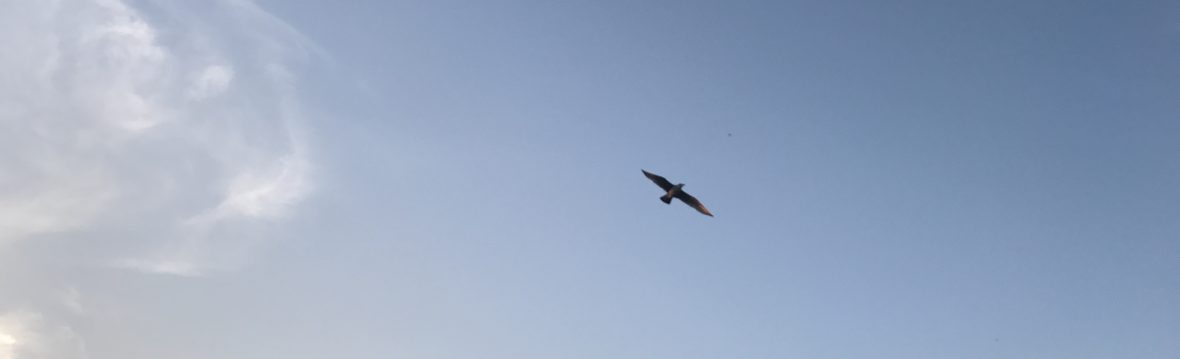
That little, talented bird with a beautiful voice that is music itself. I’m not sure I have seen one before, but I imagine he must be among those nesting in the nearby trees. 

Well … why did he crossed my mind today? 

Simply because of the book I have just finished. The Song of the Lark, which, by the way is not about the bird species. 

Can you  guess what it symbolises in the story?

It’s not hard to guess for birds, in most cases, symbolise freedom and ambition.

There’s a poem about this bird, but I haven’t read it yet. Perhaps another time. 

Away from the book and the poem, doesn’t the bird, with its unique name, feel like a musical poem? Full of energy and happiness? Beside it’s a migratory creature with an adventurous spirit. 

Watch out for him in the morning, for he’s the friend of light and the colourful kite dancing in the blue sky. 

With hope and peace,

Nahla

Just writing

Praise

Praise!

Isn’t it such an elegant word with supreme qualities?

Isn’t it special given to the special? 

But praise is not for everyone or everything. Even your beloved ones cannot receive your full praise because they are humans and humans are … human. So, the first and foremost praise is always given to the Almighty. And how simple, pure, and beautiful it becomes when offered from the heart.

We humans love praise, but things may get out of control or even become abnormal.

Starting with ourselves, don’t you entrain yourself with a little praise now and then. Well.. I do, of course, not in public but … quietly, mostly to myself, and sometimes with my family. They usually laugh, but then admit it’s a good tactic for loving yourself. 

But when your self-praise begins to puff up with conceit, you cross the limits and enter the dangerous phase of greatness insanity. So, be careful.

Then there are your beloved ones. Out of love and most of the time, you see them, or what they are doing as worthy of praise. How true and funny is this Arabic saying: the mirror of love is always blind. 

But can you praise someone even if you don’t like them? I think that’s how we prove to ourselves that we play fair. For example, you might praise someone for their beauty, intelligence, etc, even if you cringe every time you see or hear about them, as if you were eating a sour lime. (By the way my mouth’s already watering for I used to eat limes like oranges.) But that’s fine, because you’re being sincere to them and to yourself.

Now, what about praising someone you don’t like for qualities they don’t have? That’s nothing but hypocrisy. Unfortunately hypocrites deform and misuse the very connotations of praise. They grow and spread like weeds, showering those who deserve nothing, everything. Ironically, they themselves would never trust any praise. 

With hope and peace,

Nahla

Just writing

I Love Octobers

This is Ann Shirley’s famous quote. 

But, I love Octobers too. 

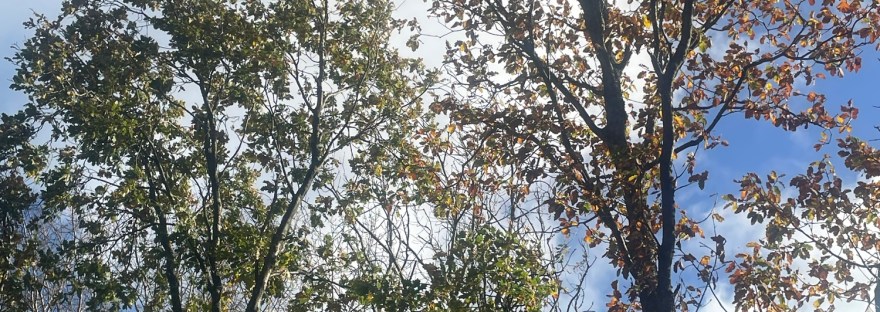
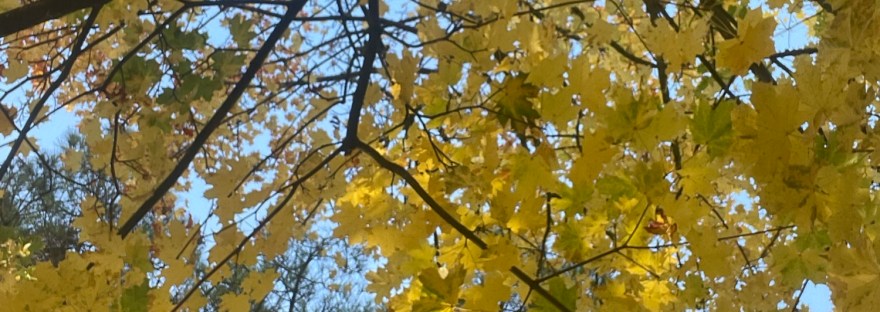
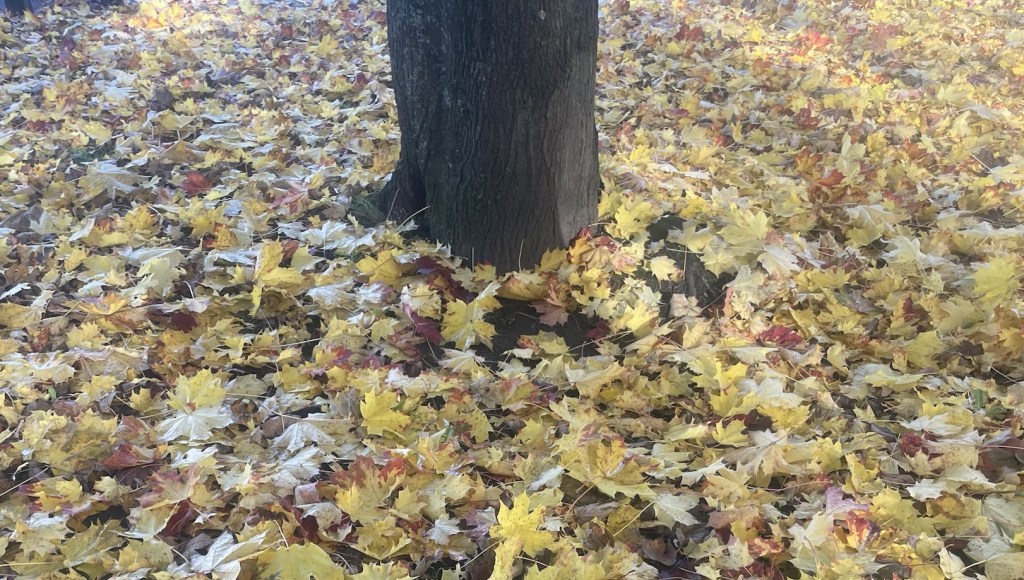
Octobers are special, colourful, and definitely cold.

Their days grow shorter, and their nights stretch long.

And you sleep more.

You sneak into bed by eight pm, and hiding under the covers until seven am.

Their meals are another story.

For of course, you eat more.

Roasts, soups, cakes, and pies.

And from now on your hands always hold a hot drink.

Tea, coffee, and herbs—all steaming with the scent of October.

This tenth month on the calendar, doesn’t it remind you of something? 

Just look back and scan the months behind you, and see how far you’ve come and how many chances still await to receive and cherish before the end of the year.

If you could think of seven positive words to boost your energy at the beginning of this first cold month on the calendar, what would they be?

Can you use only the letters of  OCTOBER, please? 

Here’s my humble contribution: 

Opportunities — They always exist, so never say never.

Creativity— Isn’t that what makes things more beautiful?

Thankfulness— Remember, there are others who can’t enjoy things as you do.

Originality— Nothing can beat it.

Blessings— They are abundant; just count them.

Enthusiasm—That’s the first push to make a good start every day.

Rejoice— Happiness is a choice.

With hope and peace,

Nahla