List three books that have had an impact on you. Why?
I love fiction, and I love it more when its prose is poetic, rich with colourful imagery, and infused with moral significance. That’s why I never hesitate to read classic novels from the early or late 19th century, every now and then, whenever they cross my path.
I read non-fiction as well; religious, philosophical, scientific, biographies, and others. However, with non- fiction, my enjoyment depends on the author’s writing style to conclude my reading with yes I like it or not
But science fiction and comics are not for me. I might watch some movies in these genres, though.
Many of the books I have read were recommendations—directly or indirectly. Some I discovered while reading other books, some while scrolling online, some through references, some by other readers, and some during my studies.
Last year, I started my quotes and book reviews blog. Honestly, this wasn’t about recommending books, but … you could say I was developing another skill related to reading and writing.
Strange, I have rarely thought about recommending books. If anyone asks me for a recommendation, I feel like my entire reading list is lost in the labyrinth of my mind’s many chambers, making it impossible to pick just one book. So, I pause and ask what they read instead. Sometimes, they give a name or two— books that, to my relief, I’ve read as well. ‘Oh, yes, I’ve read this one, and others by the same author,’ I would say. Perhaps that, in itself, could be considered a recommendation?
I can’t really think of a specific book that has had a major impact on my life. This is simply because every book I read adds something to my reading journey—even those where I skipped some sections. It’s something like I remain the same me, but with more reading, more knowledge, more lives, and, of course a better writing craft. And all of that makes a great impact on my life.
“You can tell a lady, because nobody knows she’s there.”
How would you interpret this quote?
Negative or postive?
Please don’t fight over it. An arabic adage says: if you offer a person a hundred brains to pick one, they pick their own.
According to the context in which this quote was mentioned, a lady doesn’t show off, doesn’t flirt, and, of course, doesn’t forget she’s a woman. And, this was believed to be a positive and respectful image of a lady.
Over the time, things changed, and the positive became negative, and the negative became positive.
And then, things changed again, introducing new criteria: no positive, no negative— all possible, all the same.
Now, can you just move your eyes, perhaps your glasse, to the first line and re-read the quote—carefully this time.
Did you notice anything beyond positive or negative?
What if ‘lady’ is not used as a title or compliment, but as a presence? Did you notice that the ‘Nobody knows’ might also mean ‘they know,’ but with their third eye? And finally, could ‘She’s there’ be anyone and everywhere—yet unlike anyone and not available everywhere.
Have you ever chosen to remain silent instead of speaking?
I do—most of the time.
Should I begin with critical moments or casual ones? Hmm, I think it would be better to start with the annoying moments then climb step by step toward the pleasant—or perhaps even funny—ones.
It happens when someone asks you for a favour or makes a request, but you have your reasons for not getting involoved. You explain things once, yet they hear nothing but their own voice. Not to mention the blame they put on you, as if you were part of their problem.
Just tell me—what’s the point of arguing with someone who will never be convinced, never change their mind? By the way this isn’t about stubbornness but egotism—the I’m always right mindset. Isn’t silence better than arguing back in such cases? But, of course, you can enclose some genuine prayers, hoping things will be fine soon.
Are you still climbing the long staircase?
Sure, by now, you must feel heavy and exhaused. I imagine you’ve already climbed most of the steps—apparently we experience lots of these critical situations in our lives— each one adding to a heavy load of annoying momories.
Now it’s time to switch to some pleasant moments. I guess there’re only a few steps before you reach the top step.
Sometimes, as you’re hurrying down the road, someone looks, smiles, and waves at you with a bundle of flyers and brochures in their hands. They step into your path and ask for a a few spare moments of your time. Silence becomes your escape, and a nod with a smile— along with a quick gesture to your watch—is your way of communicating apologies, if you, like me, are not interested.
And sometimes, as part of socialising, you find youself among people talking about things you’ve never read about or even heard of—like dog food and breeds. Doesn’t it make sense to remain silent? To listen, but not really listen while thinking of cute cats.
And then there’s silence—a warm gesture of respect for elders. How many times did the younger you remain silent while your grandparents or parents talk about things you could neither understand nor follow? But, they always knew you were not listening. And that’s when your sudden, genuine laughter broke the silence.
Last but not least, there’s is silence and shyness— not only do they rhyme but they are also born together. Yet, that’s not as bad as you might think, because it’s neither a birthmark nor a curse. Can we simply call it a special personal trait?
Some talk loudly and nonstop, and some listen, whisper, and weave stories in their minds.
I think by now you’ve arrived safe and sound , and hopefully happy at the top step.
They say whoever invented the window was either a thief or a lover.
What do you think?
Isn’t it facinating to imagine the story behind the invention of windows for houses? A story not related to construction or decoration, but to a person who, once upon a time, was dreaming—seeking something or someone.
Would you like to hear his story? Just keep reading.
Once upon a time, a thief sneaked into an old merchant’s house. He grabbed every piece of gold and silver from each room. The treasure was not much, but enough. As he turned and grasped the handle of the big metal door, he discovered, to his shock and misfortune, that the door was locked—utterly locked—as if it were a secret, magical guradian of the house
The thief knew the merchant was on a short trip to bring his family back home. But, perhaps, someone would come and check on the house, he thought, glancing around, trying to find a way out.
He noticed deep cracks and dampness spreading across the walls. He drew near to the wall next to the door, and pressed his hand against it—it was mushy, like wet mud. The thief laughed, relieved to find his excape. Without hesitation or much toil, he broke a hole in the wall and jumped out of the old house.
He raced against the wind under the starless sky, heading toward the dark woods where no other human dared to live. Panting, he reached a gigantic tree—his camouflage home. He dug a deep hole and hid the treasure beneath it. Breathless and sweating, he threw his weight onto the hard earth and fell asleep for the rest of the night.
With the first light of dawn, as the birds chirped and left their nests, the thief jumped to his feet and hurried to the nearest pond. He washed and put on a clean garment. Laughing, he picked some berries from the trees, devoured them, and headed back to the city. From now on, he would live a new life as an honourable man.
The market was buzzing with one story—the robbery of the merchant’s house. The thief drew closer to a group of men and introduced himself as another victim of the same thief.
‘But I can fix the wall. I am a builder, and I need money to go back to my city.’ He had woven a good story, hadn’the?
The men took him to the old merchant, who—without a second thought, agreed to the poor builder’s deal.
Over the following days, the thief transformed the hole in the wall into a beautiful, wooden window. The merchant’s oldest daughter loved the new creation and often sneaked behind it to catch a glimpse of the builder as he made windows for other houses.
The builder became well-acquainted with most of the people in the city. His window-making business flourished, and he earned a lot of money. He was aware of the merchant’s daughter’s long waits behind the window, watching him working around. He also knew of her father’s abundant wealth. The girl was beautiful—so beautiful— but he had robbed her father. What if the merchant discovered the truth one day? He fell asleep with that thought echoing in his ears.
That night, he had a dream—a strange dream.
He was in a different land, among different people, surrounded by beautiful houses with so many windows. As he walked along, he heard people talking about the two lovers who had just died. Curious, he moved closer to two men sitting on a bench by a fountain in the middle of the road. They didn’t seem to notice him. Was he invisible? A ghost? His heart pounded hard in his chest as he dropped onto the other end of the bench.
‘Romeo killed himself, and Juliet followed suit. Or was it the other way round? One of the two men broke the news. The other gasped, and the thief felt his heart in his throat.
‘I used to see them every day, laughing and singing to each other. She shone like a blooming rose in the big window, and he stood below in the garden, full of pride, crowing day and night like a young rooster.’ The first man said, the other sighed, and the thief nearly fainted.
‘But of course, her father would’ve never let her marry one of his family’s enemies— someone who was only after his wealth and money,’ the first man explained, the second nodded, and the thief died
‘Oh no, oh no, I don’t want to marry her,’ the thief screamed and woke up.
The next day, he packed, thanked his host, dug up his treasure, and fled for his life.
Years later, the wise said that true love comes from front doors, not windows. If only those wise ones had known more, they would have added and neither does it come from social media!
I once heard that laugher can relieve panic attacks. You may wonder, as I do, how someone in a panic attack could think of anything funny. Some say a person can force themselves to laugh. Perhaps this advice is based on scientific studies, or maybe it’s just an old folk remedy.
But, based on my own humble experience, I can also say that many cases of panic attacks end up being hilarious incidents.
One day before last Christmas, things went a bit spooky—just like a halloween night. December is known for its freezing weather, short days, and long nights—not to mention its violent storms. That evening, my daughter was invited to her friend’s birthday party at some restaurant in town.
Darkness fell early that evening, and strong wind began to pick up. My plan was to take the bus, stop by my husband’s workplace, and then we go together to pick up my daughter.
The moment I stepped onto the bus and scanned my ticket, I felt as if I were in the wrong time or on the wrong bus. The bus was almost full, but not of the usual passengers. Instead, it was packed with people who looked as though they were going to a party. Men and women with different ages were dressed in shiny, glittering outfits.
Slowly, I made my way to the nearest available seat and sat next to a woman who was deep in slumber. I checked the time and it was just past five pm, and I was sure I was on the right bus.
As the bus pulled away, the party started—not with singing or dancing but with loud, chaotic conversations. It was as if they were on separate buses, shouting across the road. They were planning and arguing what food or drinks to order. It was such a noisy and amusing gathering that I didn’t know whether to frown or smile.
We arrived early in town and decided to have a hot drink until it was time to pick up my daughter. The wind pushed and pulled at us as we hurried downhill toward the nearest café. The streets were almost empty— no one was around. If it wasn’t for the Christmas lights, the town would have looked like a haunted place.
We arrived home safe and sound, but not without a few surprises. My husband hurried to the nearest convenience store to buy a few things as weather warnings announced severe conditions.
For the first time since our move, the wooden front gate was locked. (It’s the type with a metal latch that you push up to open or down to lock.) That night, it was fully down and stuck. It became so dark as if it was midnight rather than just past seven pm.
I tried to unlock the gate, but my attemps didn’t work. When I asked my daughter to jump over to try from the inside, she looked shocked as if I had asked her to climb a tree. I tried and tried until the metal moved up— not completely, but enough to be pushed open.
My daughter hurried upstairs to her room to charge her phone while I heated our dinner. Then, all of a sudden, a loud alarming sound echoed all over the house. I ran back and forth, checking everything, trying to find where this sound came from. Then, my daughter started screaming from upstairs, and I ran up to her room.
‘Mama, it’s my phone. It’s making a horrible noise and it’s so hot.’ My daughter was shaking, her face pale as a white sheet. ‘Turn it off,’ I shouted, snatching it from her hands. It burned in my hand, but the alarming sound had stopped.
We both ran downstairs and left the phone on the kitchen counter, and watching it as if it might explode. The only thought popping into my mind was to throw it away into the garden. Just before taking this action, my phone rang. One of my sons was calling, and I poured out everything that had happened, except my idea to throw the phone away.
‘Are you sure the sound was coming from the phone?’ My son asked. ‘Yes,’ my daughter and I answered at the same time. ‘Was there anything else strange about it? ‘Yes, the screen turned all yellow with a warning message.’ My daughter explained.
My son burst out laughing, just as my husband walked in. ‘Did you get the storm warning message?’ he asked
‘And you were going to throw my phone, Mama,’ my daughter said, the colour returning to her face. ‘And you didn’t even try to read the message!’ I said, and breathed in relief
My daughter and I fell onto the nearest sofa, shaking with laughter, tears rolling down our faces.
What a day! But see? Sometimes, to panic is also to laugh.
We’ve had a wonderful, sunny, warm weather over the last three or four weeks? Can you believe it in the UK? It really did happen! Miraculous isn’t it? That was so encouraging to get out and enjoy long walks under the blue, shining sky.
May always brings special, unique surprises, which relate so much to the auxiliary verb ‘may.’ Both are full of possibilities, wishes, and sometimes permissions. Was the month named after the verb? I don’t know—Do you?
Do you like May? It’s okay if you may not.
I love May because it’s usually warm, colourful, and bright, but it may suprise you with heavy showers— just as the forecast expects next week.
Trees and flowers smile at May. They bloom and blossom, sing and dance, and pray: May our winter be far away!
Insects, too welcome the warmth of May. They explore freely around, but they never use ‘may‘ to sneak or rush into one’s house.
Time flies not at a airplane’s speed but like that of space rocket. And here’s May, almost gone. And you, just like me, still hoping … thinking … praying that good news may come in abundance.
May the rest of May be kind and reassuring to all of us.
There are things that don’t fit, match, or combine. Although anything seems possible these days, this perspective remains well-known and carefully considered.
Yesterday, for example, I decided to make, not apple crumble, but strawberry crumble. It just so happened that I had more strawberries and wanted to use them before they expired. I used the usual familiar ingredients but added something extra—something overflowing from its jar— cocoa powder. I added a generous amount to strawberries and baked the crumble. The result was unique—but not in the yummy way. The sweet crumble turned out bitter and sour. Hopefully, today, it will taste more edible.
Perhaps you like the cocoa–strawberry combination. Actually, I enjoy each ingredient separately, but together I found the mix awful. If only the jar had a bit more space, I wouldn’t have undertaken this experiment. But at least there’s a postive outcome—I’m writing this post.
So, as my crumble experiment proved, some things can’t just be added, mixed, or combined. You can’t, for example, blend truth with lies or belief and atheism. If you do, the outcome will be so vague, so meaningless.
Don’t you see the difference between these qualities—or rather the gap that separates them? But, though they can’t mingle, they can still define each other.
Truth is the quality of being true, while lies are things that are not true. See? They can’t be mixed— just like oil and water. Yet, clever as we are, we create something in between and call it ‘a white lie.’ Ironically, instead of using grey—the blend of two colours—we use white, a solid colour that indicates its separate entity, even though it’s attached to ‘lie.’
Therefore, while we may cross the line between certain qualities, we can never erase it.
Don’t they say: “Profound wisdom comes out of babes.” And I think some add “from the invalid too.” I’m sure you heard this quote one day—perhaps also experienced it. So, I’m not going to explain it … actually, I didn’t think about explaining it. I just thought of something different, but not different.
Am I a bit confusing? I think I am, but just keep on reading. Please.
Have you ever thought that wisdom doesn’t imply knowledge? They might meet each other at some point along the life journey, but this doesn’t mean they have to be companions.
A simple person might be as wise as a scholar is scientific. Their paths might cross, but that doesn’t mean they have to be good friends.
Knowledge is all about learning, studying, and creating abstract and complicated words and concepts in various subjects, right? But wisdom is purely innate, flowing from the heart with simple words and deep significance.
A scientist, for example, based on his astronomical studies, mathematical equations and scientific formulas may say: the Earth’s lifespan is almost over, and we need to build more spaceships and start planning to build a new world on a different planet.
Watching the scientist on the news, a simple man with basic qualifications, innate goodness and genuine faith smiles and replies: Aren’t they all the same creation? When our world is done, there will be no life elsewhere.
Transparency and wisdom are close friends—part and parcel of one another. Do you know why? Because transparency loves light, openness and honesty—the same qualities that define a wise person. No wonder both have become so rare that, nowadays, when we hear the tales of the wise man, we only think of our ancient ancestors— from the very, very, distant past.
That’s a father’s advice to his children that I came across as I was scrolling through Instagram.
I paused for a few seconds, staring at the post—perhaps you would do the same. The father says: Better to be a wolf that everyone hates than a donkey that everyone rides.
Honestly I believe this father has his own philosophy, but I couldn’t help but set aside his advice and think about the differences between the two animals. Please don’t think I’m making any reference to the father for humans are not animals … perhaps … sometimes, metaphorically, some may be, if we live just to eat and drink.
So, wolves and donkeys belong to different categories, right?
Wolves are predators—they definitely eat donkeys. They’re aggressive hunters, social within their packs, and well adapted to their environment. Children hate wolves in fiction, and farmers chase them away to protect their livestock. And, there are some humans who hunt wolves professionally, seeking their soft, thick, and expensive fur.
Do you know that wolves within their own families do not hate each other? Actually, they care for, cooperate, and communicate well among themselves. Wolves rely on their prey. They hunt to survive—which is the ultimate aspiration of any animal life.
Donkeys are herbivorous animals. They’re domisticated farm animals. They’re humble, preseverant, cautious, and well adapted to their environment. In my culture, they are not described so kindly, though. If one is lazy, stubborn, or has an awful singing voice, they might be mocked as a donkey.
Donkeys love company and live in herds, which is why they look lonely and miserable when they haven’t others around. But they can also be aggressive—any prey can be when defending itself. They kick, lunge, and bite. Yet, humans don’t hate them, instead, they use them to their full capacity. And, don’t forget that donkeys too live to eat and survive.
Wolves can never belong to a herd of donkeys, and donkeys can never be part of a wolf pack. They both can live around humans, but humans always manage to have the upper hand with both.
So, wouldn’t it be better to live as a human—not a predator or prey, but as a sensible person with free will?
Whenever I get on a train, I like to sit next to the window. I enjoy it more when my seat faces the direction the train is heading. If I find out that I’m sitting on the opposite direction, I feel a bit annoyed. But once the train starts moving and picking up speed, I don’t feel any difference.
Some people say that the one sitting by the window sees everything except the road. Do you know what this means? This means that some people become too lost in their own world to see anything else.
Have you ever felt this way?
The train is usually full of different people doing different activities just like in real life. Some read books, some work, some play games, some talk, some eat and drink, some make phone calls, some fall asleep, some watch movies, some listen to music, and some just gaze out of the window.
As the train leaves the station and picks up speed, the scenery shifts and changes rapidly. Only the one sitting by the window can feel this flow, this change— if only they choose to. And then, the mind begins to wander, inviting memories and thoughts to flow too.
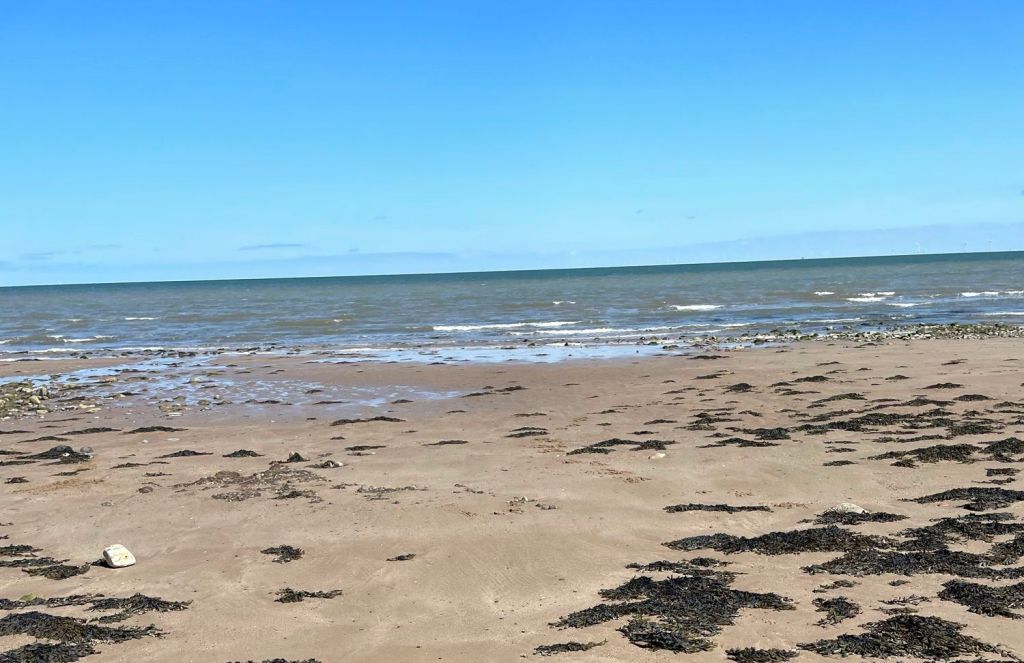
That’s why, when you sit by the window, the road remains only in a background while your mind recollecting different things. I gaze at the sky, the trees, the vast green pastures, the distant sea, the nearby river, and the horses, cows an̈d sheep grazing and napping. Meanwhile, I let my mind wander only to good memories—pleasant ones— even if it makes up some. But I also warn it not to spoil the fun.
Sometimes I can’t help but wonder how people can enjoy the journey on the new high speedy trains—those that almost reaching the speed of sound. Why? What is there to enjoy when the rider sees nothing as the train races against time through long, dark tunnels?
So, if you’re taking a train anytime soon, try to sit by the window, gaze out, and think only of good things— pleasant ones. Believe me, you’ll enjoy the journey and feel refreshed.
But if you’re feeling deeply under the weather, just close your eyes and have a little snooze.


 Pure and Simple