
personal thoughts

Reading Books Can Be Just Like Meeting People


Well… finally, I’ve finished  the book I was reading over the last month.

By the way August was  a good month with all its hustle and bustle. It’s the month of the warm, bright summer and long off work, off school break. It stirs in you that unique mixture of memories; your old time school holidays, family gatherings, and some special celebrations. Don’t you love it, even with its shocking heat waves?

Now,  back to the book: The Ambassador by Henry James. Or is it James Henry? Oh my… my brain can’t even digest the man’s name. So, this is the book that gave me a headache every time I opened it over the last month, and a few days from the month before. Have you read it? If you have, and if you enjoyed it then mes félicitations! And if you haven’t or are thinking about reading it, please go ahead, and don’t reference my experience as an excuse.

I don’t intend to share a book review in this post, perhaps I will do later on my book review blog. What I’m sharing today is the thought that struck me after finishing it: how reading books can be just like meeting people.

Have you ever experienced those feelings when you meet people for the first time? Sometimes, you feel excited, relaxed, and comfortable. Other times, you feel totally the opposite. And sometimes, you feel nothing, just neutral. That’s all expected, and that also happens when you read a book. But there’s another kind of experience, something deeper than first impressions.

The book reminds me of how you can meet others and how, for no clear reason, you choose to challenge your feelings, silence your inner voice, and keep socialising… or keep reading. As time passes, you give yourself a chance; one, two, three, maybe tens, to find something mutual, something interesting, or even honest, but … you barely find any.

But, isn’t that, in the end, why you can congratulate yourself?
Why not?
You tried to reach out. You tried to understand. And, you didn’t judge the book before reading it all.

The effort is always worthy of celebration, isn’t it? 

With hope and peace,

Nahla

personal thoughts

Mercy and Forgiveness Always Exist


Aren’t mercy and forgiveness some of the many divine attributes that we, human beings, need and even strive to show and receive to nourish a bit of this divinity inside us ? Of course they are.

Part of your being human is having a heart, a living heart with feelings and emotions. It can ache with pain and nourish with vitality. It can flutter with happiness and squeeze with sadness. It can brighten with love and darken with hate. And… it can find heaven in mercy and forgiveness.

Don’t people say, “Blessed are those with soft, kind hearts?  And in Arabic, we pray for them and say: “May Allah bless their kind hearts and make heaven their eternal home.” I believe you’ve heard or repeated this prayer, or similar ones, one day or perhaps even just now.

Nowadays, these blessings are more precious than diamonds. Do you know why? Because mercy and forgiveness strive to survive in a world that is becoming so cruel, selfish, and superficial. can’t you see that?

Well… it’s a big problem if you can’t see how these divine qualities can create a piece of heaven both into your heart and upon this earth. 

The desperate, the poor, the hopeless, the innocent, and even the sinner— all dream of finding mercy and forgiveness.  And in spite of the hell that grows bigger and bigger day after day, mercy and forgiveness do exist.

They patiently carve a path through the hardest rocky walls. They spread light, warmth, and joy into dark, frozen caves. They save lives and feed goodness to empower hope and stand against evil and hypocrisy.

So … can you just open your heart, seize this opportunity, and offer some mercy and a bit of forgiveness for yourself and others? You will lose nothing, yet you may find your own piece of heaven gently fluttering in your heart.

Things might be hard, but they are not impossible.


With hope and peace,

Nahla


personal thoughts

Passions vs Affections


Does it ever happen to you that, while reading, you pause at certain words and wonder not about their meaning but about their differences? In other words, you know which word to use,  but you still wonder why another can’t fit in this context or that situation.

Am I getting a bit philosophical?
Of course not… I’m just getting a bit speculative.

Let’s consider, for example, the words: passions and affections— the cousins from the sensitive emotions family. These two cousins are close in blood, though distant in behaviour. Isn’t their difference obvious, even in the very sound of their names?

Try and voice the two words.

Do you notice the difference?

Do you feel the strength of passions and the delicacy of affections?

By the way, both are healthy and important feelings for the well-being of humanity. However, each follows its own path.

Do you know why?

Affections are mostly hidden—quiet and deep— within the heart. Kindness, tenderness, and warmth are just a few examples of how affections work. They are private, gently whispering to awaken what’s good and pure inside us.

Passions, on the other hand, are strong, fiery, and bold. Excitement, temper, and recklessness are some examples of how passions work. They scream, shout, and might even fight to arouse and fuel the fiery emotions within us. Lust, in its many forms, is fed by the reinless passions— isn’t it?

Perhaps this is why affections live long and strong, while passions, in most cases, are extinguishable and short-lived.

And at the end of a long day, when eyes are tired and heavy with sleep, it’s the whisper of a genuine prayer, a kind gesture, or a gentle touch that weaves our happy dreams.

With hope and peace,

Nahla

personal thoughts

What is the Art of Waiting?


It’s the highly esteemed virtue—

the companion of wisdom,

the friend of perseverance,

the key to peace,

the first rule of trust,

the fuel for success,

the road to love,

and the gate to happiness.


Am I missing something?

Oh yes—

it’s the prayer we repeat,
believing it’s been heard
and will be answered
at its perfect time.

Now, do you know what the art of waiting is?

It’s patience.
And it is really hard to master this highest form of art.

But, sometimes, people test your patience until you can’t hold the horses anymore. You won’t just let the horses go wild, but you might burn the bridges or, like Samson, destroy the temple.

Perhaps that’s why patience can’t thrive without faith.

Aren’t the patient the most blessed?


With hope and peace,

Nahla

personal thoughts

Can We Foretell the Future?

“…it is impossible to foretell the future with any degree of accuracy, that it is impossible to rehearse life.”

This post is inspired by this quote from A Room with a View by E. M. Forster—a book I finished reading a few days ago.

There’s an interesting irony woven naturally into the story. It’s about life, reminding us that it isn’t a script to be read, memorised, or rehearsed. Instead, it flows and surprises us in unexpected ways.

Strange, how others, unintenionally, play a role in paving our path to happiness without being a part of it.

Strange, how those who wish us ill end up helping us grow and live better lives.

Strange, how annoying, boring delays save lives.

Strange, how the rush—that nagging impulse—is just an urgent call to fulfil something before it’s too late.

And isn’t it strange how we make plans, rehearse good speeches, feel things under control…, and then life surprises us in the most miraculous ways.

Isn’t that just life?

Isn’t that why God reminds us: it’s temporary?


With hope and peace,

Nahla

personal thoughts

Spring And May


It’s almost the end of June—I know. But the book I am reading nudged me to use Spring and May in this post.

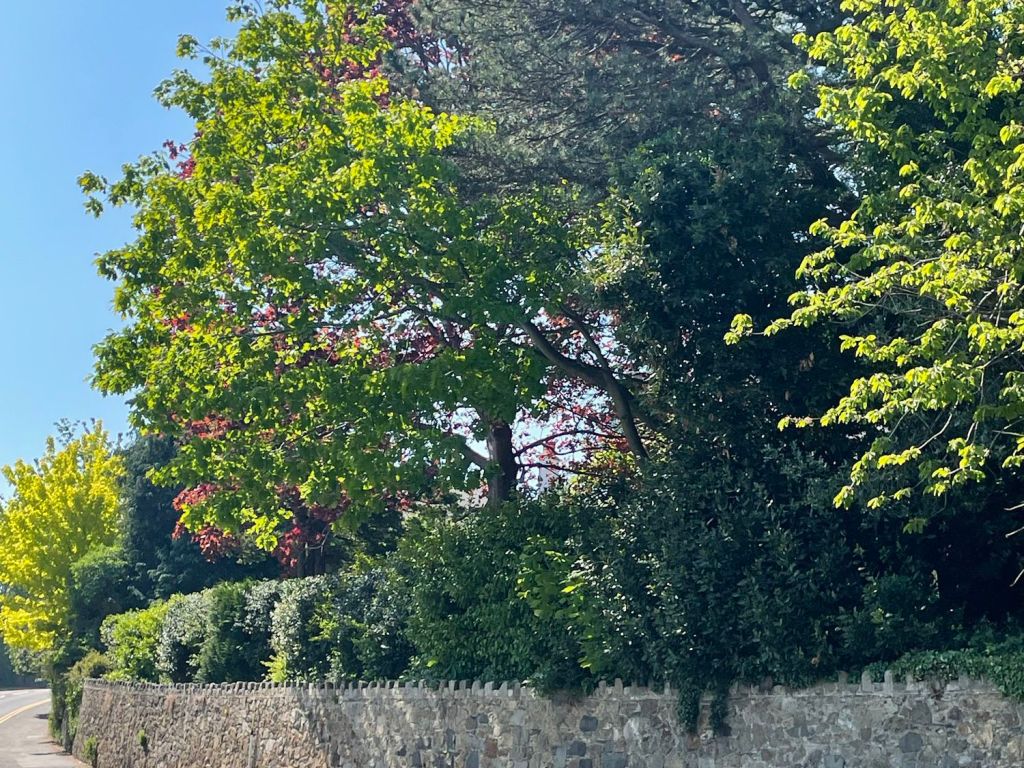
Don’t you like Spring and May? I believe most of us do. They are full of colours, warmth, hope, beauty, brightenss, rebirth, and so many other positive qualities.

Yet we… no, some… perhaps a few are just fighting the first and engaging in a usuelss war against the second.

Now, just a second— I mean Spring and May literally, not literarily.

Here are two quotes to ponder over this weekend… or perhaps for the rest of your life.

“Don’t go fighting against the Spring.”
To me, this means: don’t try to spoil beautiful moments. If you can not live them, at least pause to appreciate them.

“War not with the May.”
This has a similar interpretation to the other, but war is stronger, more dangerous than fight, right? To start a war is to destroy things completely, mercilessly, savagely.

So, “War not with the May” means: do not destroy life,  beauty, hope, or dreams. Let May live. Perhaps its warmth, feshness, and tendreness can find a way into those dark, solid hearts.

By the way, spring is not just about May. Your soul and heart can blossom at any time throughout your entire life.

Haven’t you seen flowers in December, and green trees in Januray?

With hope and peace,

Nahla

personal thoughts

You’re Wasting Your Time


We repeat this sentence quite often. Most of us are even willing to volunteer advice, recommend ideas, and suggest plans to help others be productive and overcome laziness. Right?

But have you ever consifered that people are different? What you see as a waste of time might be the greatest success someone else can achieve in their life.

Fame, money and power are not the ultimate proof that we are making the best use of our time. In fact, these glimmering idols are some of the most dangerous thieves of time. They glow with sparkling lights on the horizon, and you follow them—day after day, month after month, and year after year.

Through your journey, you achieve things—perhaps great things—yet you still chase the dazzling lights. You keep walking, oblivious to how time has slipped through your fingers, like soft sands. Suddenly, exhausted and drained, you blink and look back. Stupified, you gaze near and far, wondering about the many things, moments, and people you’ve missed, ignored, or—worse —belittled while chasing a mirage that never ends.

Do you agree with whoever said, “Lost time ticks in hell”? Isn’t it actually so right? I believe it is, and I’m also convinced that it applies both to those who chase the distant, dazzling mirage and to those who do nothing but watch, dreaming of following the same path. In the end, both cry over spilled milk—though they could have simply enjoyed it while they had the chance.

Our lives are not the same. You have certain chores, commitments, and deams to fullfil and I have mine— which might not seem so different. We waste time when we either achieve too much or nothing at all. Time is life, and life is not about gaining more or less. It is about what, how, and why you gain.

Only then will you know that you are not wasting your time.

With hope and peace,

Nahla

personal thoughts

A Lady

“You can tell a lady, because nobody knows she’s there.”

How would you interpret this quote?

Negative or postive?

Please don’t fight over it. An arabic adage says: if you offer a person a hundred brains to pick one, they pick their own.

According to the context in which this quote was mentioned, a lady doesn’t show off, doesn’t flirt, and, of course, doesn’t forget she’s a woman. And, this was believed to be a positive and respectful image of a lady.

Over the time, things changed, and the positive became negative, and the negative became positive.

And then, things changed again, introducing new criteria: no positive, no negative— all possible, all the same.

Now, can you just move your eyes, perhaps your glasse, to the first line and re-read the quote—carefully this time.

Did you notice anything beyond positive or negative?

What if ‘lady’ is not used as a title or compliment, but as a presence?  Did you notice that the ‘Nobody knows’ might also mean ‘they know,’ but with their third eye?  And finally, could ‘She’s there’ be anyone and everywhere—yet unlike anyone and not available everywhere.

This can only be a special perspective, right?

With hope and peace,

Nahla

personal thoughts

They Can’t Mingle

There are things that don’t fit, match, or combine. Although anything seems possible these days, this perspective remains well-known and carefully considered.

Yesterday, for example, I decided to make, not apple crumble, but strawberry crumble. It just so happened that I had more strawberries and wanted to use them before they expired. I used the usual familiar ingredients but added something extra—something overflowing from its jar— cocoa powder. I added a generous amount to strawberries and baked the crumble. The result was unique—but not in the yummy way. The sweet crumble turned out bitter and sour. Hopefully, today, it will taste more edible.

Perhaps you like the cocoa–strawberry combination. Actually, I enjoy each ingredient separately, but together I found the mix awful. If only the jar had a bit more space, I wouldn’t have undertaken this experiment. But at least there’s a postive outcome—I’m writing this post.

So, as my crumble experiment proved, some things can’t just be added, mixed, or combined. You can’t, for example, blend truth with lies or belief and atheism. If you do, the outcome will be so vague, so meaningless.

Don’t you see the difference between these qualities—or rather the gap that separates them? But, though they can’t mingle, they can still define each other.

Truth is the quality of being true, while lies are things that are not true. See? They can’t be mixed— just like oil and water. Yet, clever as we are, we create something in between and call it ‘a white lie.’ Ironically, instead of using grey—the blend of two colours—we use white, a solid colour that indicates its separate entity, even though it’s attached to ‘lie.’

Therefore, while we may cross the line between certain qualities, we can never erase it.

With hope and peace,

Nahla


personal thoughts

Multifunction Printers


A few years ago, we purchased a printer—not as a luxury, but because we really needed one. So, we chose an HP model with multifunctional tasks: printing, scanning, and photocopying (faxing was not included). We still have it, and it’s working fine. We haven’t decided to replace it yet, because it’s just eight years old. However, technology has advanced rapidly in recent years, producing massive, unbelievable changes in the electric devices industry.

In comparison to the modern printers, our poor printer seems to have suddenly aged. Nowadays, we realise that it takes a few minutes, and sometimes even longer, to complete a print order, making us almost give up waiting. Not to mention, how it chugs along during printing, just like an old steam locomotive from the 19th century. Still, I find it really entertaining.

What about multitask printers? I read that they’re the postmodern generation of the multifunctional ones. They can print, scan, copy, and fax at the same time. Perhaps they can talk, maybe even walk. Isn’t that mind-blowing? But, they also say that these new-age printers, though very efficient, have a complex internal mechanism that makes their repair an awful nightmare. So, if it breaks down, you will cry your eyes out over the money you’ve spent because you’ll have no choice but to replace it. That’s why I wish my old printer a long, healthy life.

Now let’s move to the main point of this post. Do you prefer to be multifunctional or a multitasker? But first, let me share my  perspective on both.

There’s both flexibility and practicality in being multifunctional as you can do certain jobs in your own time. However, being a multitasker is like being unbendable and machinery. Any multitasker has to handle more different tasks within nearly the same fixed timeframe just like a multitask printer.


If there’s anything that could summarise a multitasker’s life, there would be nothing better than a juggler tossing and catching balls into the air all his life. He smiles, perhaps laughs, and perhaps putting on a clown costume too—such a good player. But what a life to live when you can’t let go, when you can’t miss the ball, when you can’t stop to breathe, really breathe.

A multifunctional person’s life needs no juggling, no balls to toss and catch. You just pick the right job, just as the bowler picks the right ball. You handle one task at a time, taking your time to fulfill it before moving on to the next task. The bowler grips the ball, takes a good position, and throws it—done. He may hit the target, and he may not, but he does the job with careful calculations and adaptability.

Over the years, I have met many people. I saw how some made their life even harder by choosing to be multitaskers. And they complain about challenges and exhaustion. They wish others would lend a hand or that things were easier. But aren’t they the ones who chose to be the juggler? Why did they choose to work like multitask printers, taking on multiple tasks all at once?

“To be or not to be, that is the question.” is really a great slogan, but I prefer to live by this one: To live, and to choose how to live—that is the question.

With hope and peace,

Nahla