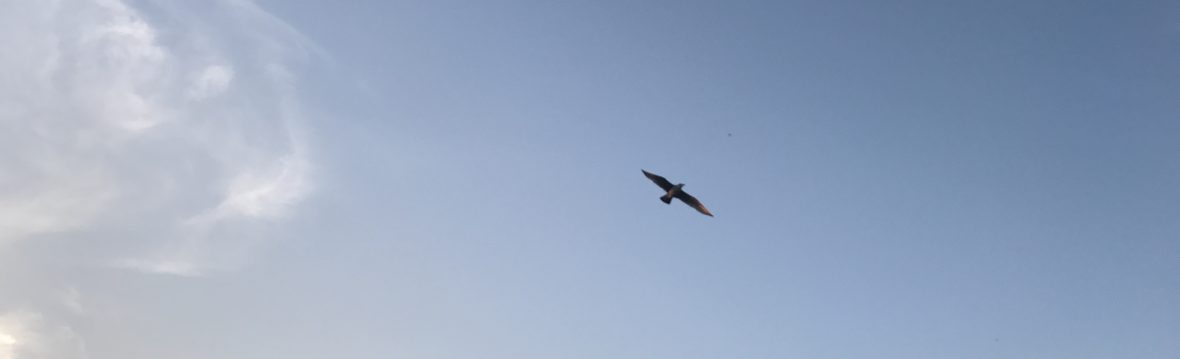

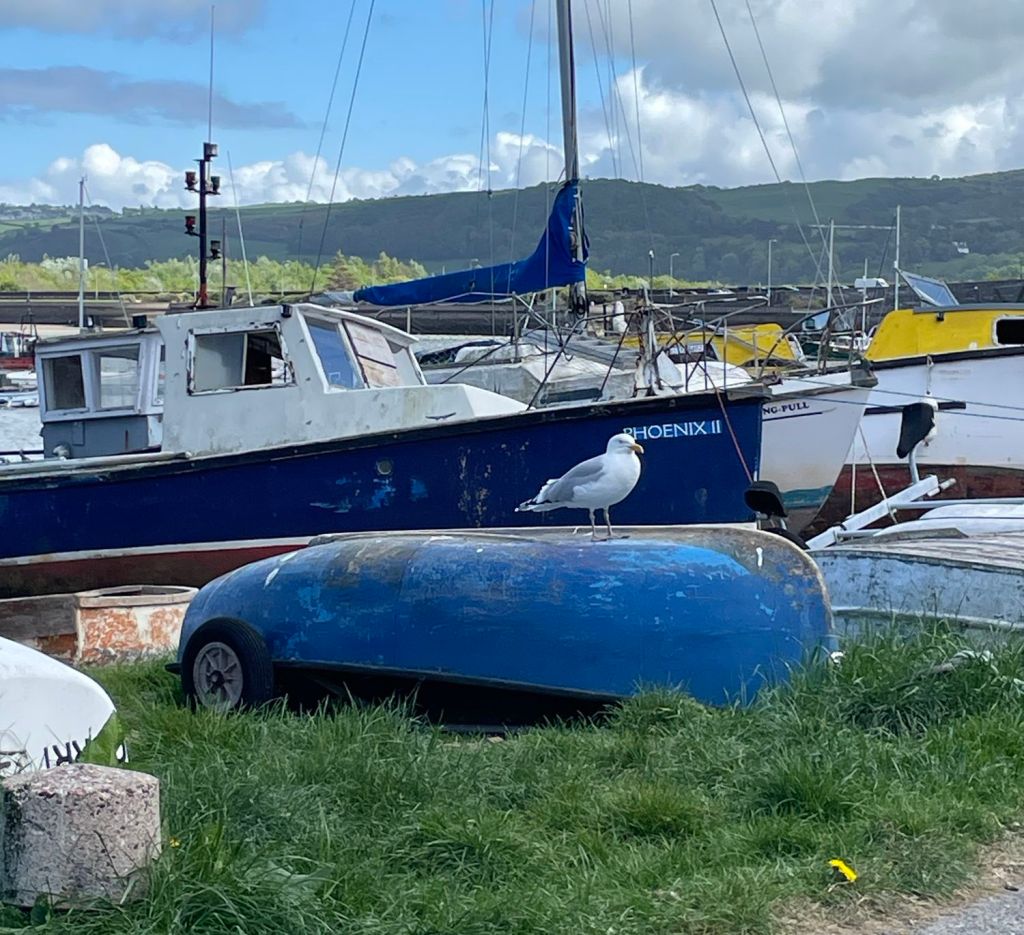
I smiled when I saw this gull as I took the photo. Can you see how confident and steady it paused as if it knew about photography and how to master the perfect pose. Perhaps it knows about social media, and dreams of becoming a celebrity among its own kind. That would be totally unbelievable!
As you see in the photo, the sea, the boats, and the clear sky (it was all blue later on) create a beautiful, natural background. But what you can’t see behind my phone camera is the hustle and bustle on the seashore. There were rows of benches lined along the seafront, and people sat there eating, talking, and basking in the sun. We were there too— my daughter and my husband enjoying their ice-cream, and I drinking orange juice. It was just then when I saw that dangerous bird, landing gracefully on that picturesque boat, and watching every soul around just like a hawk watching its prey.
Such greedy birds! Nature provides plenty for them—fish in the sea, worms in the soil, and more hidden beneath the sand. Yet, they are never satisfied. Always looking for the easy catch—human food. Excellent fishers and divers, these birds are professional at snatching and stealing others’ food. They seem to never have their fill—always watching, always wanting. That’s why I call them dangerous.
But they say humans are responsible for these birds’ changing of behaviour. They have spoiled the gulls by feeding them their own food. And that’s also why humans had tried to solve the problem by putting big sings that read: “Don’t feed them.” I saw these signs years ago, but not anymore. However, signs or no signs, the gulls have already adapted to their easy catch meal.
Aren’t there people who behave just like these greedy gulls? Those who have plenty but always set their eyes on what others have, what others eat, wear, and so on. The madness of social media has spread the danger of this phenomenon so badly. If gulls watch out of greed, unfortunately, some humans do the same, plus adding hate and envy.
Ironically, the sign that says: “Don’t feed them” could also apply to us—humans. But would we understand it? Would we see that we, too, need to stop feeding our bad habits, unhealthy curiosity, and negative feelings toward others.
Of course, we can—if only we’re willing to.
With hope and peace,
Nahla
 Pure and Simple