
Just writing

A Pet in The Vacuum!

What is good about having a pet?

It happens that, out of all the books you read, some leave you with funny memories. You may totally forget the author and the book, yet some of its narrative, perhaps its themes, stuck into your head. 

Have you experienced this before? 

I have, and that’s what inspired me to write this post.

So, in one of the novels by a popular author( whose name I cannot remember right now, and if I try, I will lose the thread of this post)

But you don’t want me to lose the thread, do you?

Now, back to the main point: a parrot was one of the characters in the story. He wasn’t a main character, but an essential one. 

Do you wonder why? 

Because he brightened the last days of an old lady’s life. 

By the way, in Egypt, when one repeats other’s words without thinking— or worse without understanding, they’re called a parrot. 

In the story the parrot was… imprudent, throwing swearing words at others, not for fun or for a fight, but because his owner was professional in that craft. 

Then one day, the person who was taking care of the parrot while his friend was away on business, decided to give her flat a good cleaning. She grabbed the vacuum, turned it on, and got to work. The place looked so clean and tidy, but something was missing.

She felt something was missing, clearly, definitely missing. And that was it: the flat was so quiet. She could hear a pin drop. But how? Where was the source of everyday noise, the maestro of the swearing symphony? 

A few moments later, she saw him, swallowed by the vacuum and trapped inside like a fluffy toy.

She rushed to pull him out and held him in her hands. 

His eyes were open and he was breathing, but that was all. 

It seemed the shock, whether an electric or emotional, had switched off his brain. 

For days, his condition remained unchanged. No noise, no food. Still, he was alive.

A few days later, he was taken to the old lady. She laughed at his mishap, but she also felt sorry for him. 

She didn’t give up on him. Every day, she gave him food and water.

Bit by bit, his life was restored, but his voice was never the same. And, the good thing was he lost his old vocabulary. Yet he made the old lady laugh, and she felt quiet responsibility towards that poor creature. 

I remember there was a quote that explained how a pet can help people live longer and happier. 

Now take care,

Watch the vacuum,

And teach your pet good manners! 

With hope and peace,

 Nahla

Philosophical musings

What Does the Fish Want to Say?

“If the fish comes out of water to tell you the crocodile is ill, believe it.”

I came across this sentence while I was scrolling through instagram. 

Is it a puzzle? I wondered, and decided that the only way to find out was to see how writing might solve it. 

But first: have you ever come across this one before? 

I’m just curious about its origin.

So, let’s set the scene first.

An old wise man was walking along the riverbank just after dusk. (Now, don’t ask me why an old man. I really don’t know, it just came that way into my head. Besides it sounds better than “an old woman” in the context of a quiet, dark background. And don’t ask why wise. Actually … I can see your point. Not every old men behave wisely. But, at lease let’s make them wise in stories. Now not more interruption, please.) 

Once upon a time, an old wise man was walking along the riverbank just after dusk, as the last reddish ray of the flaming sun sank deep behind the big, dark mountains. He was having his usual evening walk by the river. Whether it was cold or warm, rainy or dry, busy or quiet, he never missed this routine unless something serious held him back. 

On every evening walk, the old man had a plan—a simple plan to make a kind deed.

Sometimes he gave a stray cat some food,

sometimes he picked up litter and dropped it in bins,

sometimes he helped a mother get her baby’s pram onto the bus,

sometimes he sat back on a bench and patted another old man on the back as he listened to his heartbreaking story,

and sometimes he tried other gestures of kindness.

Until the day he took his evening walk by the riverbank, when it was extra quiet. The only thing he glimpsed that evening was a faraway, shiny golden fish bouncing on the beach. 

The fish was the size of a medium salmon. He glanced right and left, wondering whether anyone might run and catch her for their dinner, but there wasn’t a soul around.

He rushed towards the fish, not to make her his dinner, but to push her back into the water so she might live. When he was about a metre away, she made one great bounce into the air, and spoke in a human voice: “The crocodile is ill.” As she landed on the damp beach, a high tide crept forward and swallowed her back into the deep river.

The old wise man stared into the deep river under the dark sky, wondering whether he was dreaming. After a few long moments of silence, he turned and walked back towards the road.

“Even if it was all a hallucination… what does ‘the crocodile is ill’ mean?” He wondered, and sat on the nearest wooden bench.

“If the crocodile is ill, perhaps it means the world is finally safe. People can go out and about with no fear, no threats, no weapons. Perhaps, now they can swim into the river and get rid of it. Then, life will be safe, fishing will be abundant, and people will be free. 

“Or… if the crocodile is ill, it may be a warning of danger, awful danger. The river is no longer pure, no longer clean, no longer suitable for life. Not because of the crocodile but because of the river itself. Its water may be polluted, and the land no longer fit for living.” 

A moment later, a young man drew near him and gently whispered, “Aren’t we blessed to have this beautiful river…. Tomorrow we’re going fishing.”

The old wise man smiled. He had found the answer.

But… do you think which one was it?

With hope and peace,

 Nahla

Just writing

The Lark

That little, talented bird with a beautiful voice that is music itself. I’m not sure I have seen one before, but I imagine he must be among those nesting in the nearby trees. 

Well … why did he crossed my mind today? 

Simply because of the book I have just finished. The Song of the Lark, which, by the way is not about the bird species. 

Can you  guess what it symbolises in the story?

It’s not hard to guess for birds, in most cases, symbolise freedom and ambition.

There’s a poem about this bird, but I haven’t read it yet. Perhaps another time. 

Away from the book and the poem, doesn’t the bird, with its unique name, feel like a musical poem? Full of energy and happiness? Beside it’s a migratory creature with an adventurous spirit. 

Watch out for him in the morning, for he’s the friend of light and the colourful kite dancing in the blue sky. 

With hope and peace,

Nahla

story

Is It a Useful Gift or a Bad Trait?


Today, it’s about curiosity, but why curiosity? Because last night, as I was reading my book, a sentence stuck in my head, and I couldn’t help but think and rethink and write about it.

But before I reveal this thought‐provoking sentence, I’m just wondering what you think about curiosity? Is it a useful gift or a bad trait?

By the way, the verb wondering is usually used when we are curious about something, right?

Honeslty, until this very moment, I’m wondering— if useful gift and bad trait were measured on a scale, which one would weigh heavier? Surely, the heaviest would be the winning characteristic of curiosity.

Now, bear with me as I investigate the case of Mr. Curiosity—the one who killed Ms. Cat. 

‘What an awful, tragic ending!’ A witness, shedding earnest tears, reported the incident to the police officer.

‘I was at the bus stop, waiting for the bus that seemed to never come. Delays, delays, delays— I read while checking the time on the screen. I was exasperated. I had shopping to do, food to cook, and a football game to watch … but hey, Officer, who do you think is going to win the cup—Spain or Portugal?

‘I don’t care—just tell me about the cat?

‘Oh, poor Ms. Cat. She was wandering around before hiding behind that tree.’ The witness pointed to one of the trees.

The officer huffed and puffed, couldn’t wait to jump into his air‐conditioned car, and flew back home.

‘Then, all of a sudden, she ran across the road and joined me at the bus stop—at this exact spot where you’re standing, Officer?

The officer looked down and wiped his face, his patience almost worn out.

‘She did not meow or purr like normal cats. No— she moved quietly and stealthily, sniffing the hard ground and the grass around. I thought she was poorly or hungry and whispered,”I wish I had some some food to give you.”

‘ “you’re so kind, but I’m not hungr,” she replied, Officer. I almost fainted from shock.  Cats don’t talk…do they Officer?’

The officer pressed his lips together, wanting so much to slap the man’s face, to wake him from what seemed like a long nightmare.

‘They can, Officer. That poor Ms. Cat told me so, and that’s why I call her Ms. Cat. But then she told me that Mr. Curiosity had sent her on a certain mission. Do you know Mr. Curiosity, Officer?

The officer shook his head.

“Neither do I. But I asked her who he was, and she said he was her best friend. Then, I asked her about the mission— in case it was a conspiracy or something dangerous. Wasn’t it right to ask her, Officer?

The officer gave a slight nod, holding his tongue— didn’t wish to explode.

‘She told me that, weeks ago, a stray dog had been sneaking around her beautiful house. Oh, the poor thing— she lived in a beautiful house with a massive garden and a swimming pool, which she hated so much. But she loved the garden, where she chased birds, squirrels, and butterflies. Do you have a house with a big or small garden, Officer?

The officer inhaled deeply, then exhaled, shaking his head.

‘I wish I had one. Ms. Cat would have invited me to her house if she had lived longer.’ He burst into tears.

The officer’s face was buring, but he turned and paced a few steps back and forth.

‘But then, that beastly dog came in—uninvited— and settled in the garden while her human family was on holiday. He jumped into the pool, made a big mess in her beautiful outdoor wooden house, devoured her food and snackes, and licked up all her milk. They had a big row, but she won, and he ran away. Wasn’t she so brave, Officer? Officer? …Officer? …Officer?

The officer blinked— he couldn’t believe he had dozed off. He nodded, wishing with all his heart that the report was finally done.

‘I asked her why she was looking for that beastly dog after all that had happened. She said her friends had heard that a family had adopted him and that he was living in luxury. She couldn’t believe them, so Mr. Curiosity advised her to investigate. She asked me if I had seen a dog with a golden chain around his neck. I said no. Have you seen any, Officer?

The Officier bit the inside of his lip until he tasted blood, then shook his head.

‘Then, all of a sudden, I saw her eyes widen. Looking so attentive, her body tense and ready, she told me the dog was near and coming closer. I looked around, Officer, but there were no dogs. The only thing I could see was my bus rolling down the road as slow as a slug. But then, I  glanced up and saw a car racing madly from far away.  As it overtook the bus,  I saw a dog inside with a golden chain around his neck. I turned to tell Ms. Cat, but she had already run into the road. I saw her flying through the air before landing with a heavy thud on the hard gravel.’ He burst out wailing.

The officer let out a long sigh— finally, it was all over, and he could go home.

‘Are you going to arrest the dog?’ asked the witness, and the officier nodded.

‘Where are you going to bury Ms. Cat?’

‘But you forgot something— Ms. Cat has six more lives to enjoy. So perhaps you’ll see her again.’

The officer smiled and took the drunk man back to his house.

So, curiosity killed the cat— and the witness’s curiosity stretched the story to what felt like forever for the officer. But thanks to the officer’s lack of curiosity, the story ended just in time.

So, now, it seems that too much curiosity makes you nosy, prying, and meddlesome. None at all, and you become indifferent, apathetic, and ordinary. But a bit of curiosity is acceptable— just like salt in life. Right?

Now, here’s the quote:

“Curiosity is one of the lowest of the human faculties. You will have noticed in daily life that when people are inquisitive, they nearly always have bad memories and are usually stupid at bottom.”

I agree—but only if it’s too much.


With hope and peace,

Nahla


Just writing, story

Thief or Lover?

They say whoever invented the window was either a thief or a lover.

What do you think?

Isn’t it facinating to imagine the story behind the invention of windows for houses? A story not related to construction or decoration, but to a person who, once upon a time, was dreaming—seeking something or someone.

Would you like to hear his story? Just keep reading.

Once upon a time, a thief sneaked into an old merchant’s house. He grabbed every piece of gold and silver from each room. The treasure was not much, but enough. As he turned and grasped the handle of the big metal door, he discovered, to his shock and misfortune, that the door was locked—utterly locked—as if it were a secret, magical guradian of the house

The thief knew the merchant was on a short trip to bring his family back home. But, perhaps, someone would come and check on the house, he thought, glancing around, trying to find a way out.

He noticed deep cracks and dampness spreading across the walls. He drew near to the wall next to the door, and pressed his hand against it—it was mushy, like wet mud. The thief laughed, relieved to find his excape. Without hesitation or much toil, he broke a hole in the wall and jumped out of the old house.

He raced against the wind under the starless sky, heading toward the dark woods where no other human dared to live. Panting, he reached a gigantic tree—his camouflage home. He dug a deep hole and hid the treasure beneath it. Breathless and sweating, he threw his weight onto the hard earth and fell asleep for the rest of the night.

With the first light of dawn, as the birds chirped and left their nests, the thief jumped to his feet and hurried to the nearest pond. He washed and put on a clean garment. Laughing, he picked some berries from the trees, devoured them, and headed back to the city. From now on, he would live a new life as an honourable man.

The market was buzzing with one story—the robbery of the merchant’s house. The thief drew closer to a group of men and introduced himself as another victim of the same thief.

‘But I can fix the wall. I am a builder, and I need money to go back to my city.’ He had woven a good story, hadn’the?

The men took him to the old merchant, who—without a second thought, agreed to the poor builder’s deal.

Over the following days, the thief transformed the hole in the wall into a beautiful, wooden window. The merchant’s oldest daughter loved the new creation and often sneaked behind it to catch a glimpse of the builder as he made windows for other houses.

The builder became well-acquainted with most of the people in the city. His window-making business flourished, and he earned a lot of money. He was aware of the merchant’s daughter’s long waits behind the window, watching him working around. He also knew of her father’s abundant wealth. The girl was beautiful—so beautiful— but he had robbed her father. What if the merchant discovered the truth one day? He fell asleep with that thought echoing in his ears.

That night, he had a dream—a strange dream.

He was in a different land, among different people, surrounded by beautiful houses with so many windows. As he walked along, he heard people talking about the two lovers who had just died. Curious, he moved closer to two men sitting on a bench by a fountain in the middle of the road. They didn’t seem to notice him. Was he invisible? A ghost? His heart pounded hard in his chest as he dropped onto the other end of the bench.

‘Romeo killed himself, and Juliet followed suit. Or was it the other way round? One of the two men broke the news. The other gasped, and the thief felt his heart in his throat.

‘I used to see them every day, laughing and singing to each other. She shone like a blooming rose in the big window, and he stood below in the garden, full of pride, crowing day and night like a young rooster.’ The first man said, the other sighed, and the thief nearly fainted.

‘But of course, her father would’ve never let her marry one of his family’s enemies— someone who was only after his wealth and money,’  the first man explained, the second nodded, and the thief died

‘Oh no, oh no, I don’t want to marry her,’ the thief screamed and woke up.

The next day, he packed, thanked his host, dug up his treasure, and fled for his life.

Years later, the wise said that true love comes from front doors, not windows. If only those wise ones had known more, they would have added and neither does it come from social media!

Did you like my story? Try and write yours!

With hope and peace,

Nahla

personal thoughts

They Asked Her Why …


They asked her why she said ‘no’ to his marriage proposal.
‘Because he’s so poor—money is all he has,’ she said, smiling.

I read this very short story once, and isn’t it a beautiful brief one that offers priceless advice to young girls and women around the world.

Say that’s vague idealism, that’s madness, or that’s out-of‐place -and- time wisome. Still, it’s such genuine advice — an ultimate truth! Money alone doesn’t make real happiness.

Just read it carefully. It simply means not to marry only for money. Yes, those who seek only money in life may have it multiplied, trilionied, and live the life of their dreams – or even a life that surpasses all possible dreams. Yes, they can buy the whole world, govern it, and control it. Yes, they can look young, enjoy perfect health, and create robots. But all of it can vanish in the blink of an eye, as can the life around it. Money without sanity, without communication, without understanding, without wisdom — and above all, without love can’t create a strong bond or a healthy marriage. 

One old Egyptian movies dramatised this idea beautifully. The hero was an illiterate – completely illiterate – but a very smart garbage dealer (I’m not sure if this is the right word for his profession but he owned something like a waste dump centre) He made a fortune at a young age, and his wealth grew year after year. One day, a beautiful young lady crossed his path, and without wasting any time, he began his investigation. He found out that she was in love with a poor but highly educated teacher, and he also knew about her dream of becoming a doctor. He knocked straightaway on her parents’ door, asking for her hand. Dazzled by both his money and his promise to fund her medical qualification, she agreed to marry him.

Halfway through the movie, the poor girl became a famous doctor, Her husband made more and more money but remained the same illiterate garbage dealer. Their married life turned into a distant life, just like that of two distant relatives who hadn’t met, rarely talked to each other, and never shared any warm feelings.

One day, the husband decided to change things by all means when he discovered he was dying. He was the one who made his wife a famous doctor, and believed he had the very right to be a part of her life untill the end. He began visiting her clinic, joining her meetings, and waiting for her every night. Yet,things went from bad to worse. He couldn’t understand anything about medicine or even understand his wife. She hated him, hated his money, and hated her life, until she finally asked for a divorce. But it was too late. The last scene was for the wife, screaming and crying, full of guilt because she hadn’t tried even once to help her husband as he had helped her. And, she hated herself for marrying only for money.

Now, do you still think that’s all just vague idealism?

With hope and peace,

Nahla

Just writing, story

April and its long-awaited bright days


As far as I can remember I haven’t known anyone with a birthday in April. The calendar has at least one birthday marked on every month ‐ except April. Not that it makes much of a difference, but the thought just crossed my mind. Perhaps, one of you reading this post is celebrating a birthday this month?

But it’s a beautiful, springy month. When it arrives, it announces the beginning of long days and short nights. What’s more, it relieves us from the long month of March. Have you ever noticed how those thirty-one days of March feel like the slowest in the entire calendar? Perhaps, It’s just me feeling that, but they really crawl at a turtle’s pace.

Have you ever heard about the Nile Bride? In case you haven’t, here’s the story.

Once upon a time and in a special April day, during the Pharaonic era, the Ancient Egyptians decided to offer a maiden bride as a sacrifice bride to the Nile. They believed this act would make the river flow all over the year and bring abundant harvests.

The bride was chosen at a young age. The status of her family was important, and so was her record of medical health. And, of course, she had to learn swimming. After all, it would be a shame, if history said that the Ancient Egyptians who built the great pyramids used to sacrifice a bride who couldn’t swim on the Nile’s alter. Besides, the Nile would expect a beautiful bride not a corpse. Therefore, the Great King would deliver a memorable speech at the ceremony, clearing up  any misconceptions or alterations about the sacred rules that might emerge in the future.

‘The Nile isn’t an artificial lake or a small muddy pond. It is the lifeblood of  Egypt,’ boasts the king. ‘Our Nile deserves the best, and his bride shall be our queen for an entire year.” The king voice reverberates, and the crowd cheers. ‘This gold crown with all its diamonds and holy stones is your dowry, our Nile Bride, our queen.’ The king places tge crown on the bride’s head, offering  her his blessing.

‘And if you don’t survive, our Nile will still be pleased, for the dowry will return to its holy source,’ the king declared, his gaze fixed on the bride. ‘Now you have two wishes; one to be gratnted if you return safe and sound, and one to be fulfilled if you don’t.’

Silence enveloped the entire scene. The crowd stood tall, strong, and mute like granite statues. The birds hid among the trees. The horses grazed here and there, moving as quietly and slowly as old turtles. The only sound that made the scene live was the river’s flow – elegant, smooth, and shimmering.

The bride, in her white Pharaonic dress embroidered with blue, red, oranges, and yellow jewellery across the chest, felt a terrible headache. The crown on her head weighted as if it were ten tons, making it too difficult to think and impossible to make any wishes. She felt the blood in her small head trapped and squeezed inside her veins. For a moment or two, only two wishes lingered in her mind, and were on the tip of her tongue, ready to escape her lips, if she hadn’t sealedthem shut just in time. For the wish she’d make if she survived, she wanted so much to push the king into the river, wearing the same crown to see whether he would make it out alive. And for her wish if she didn’t survive, she prayed the king would have the honour of diving into the sacred river himself to retrieve the holy crown without any blessings, without assistance.

The bride glanced at the king, but his stern, hard gaze warned her that she was running out of time, and he was on the verge of losing his patience. Did he read her mind? She swallowed hard and forced a smile.

”I have no wishes, Your Highness, other than to wish you a prosperous afterlife in the great pyramid,’ she replied and jumped into the river.

The bride survived and the king was buried in the great pyramid.


Of course, this story is purely fictional — I made it all up. You can think of it as one of April Fool’s Day pranks. And, to be more honest, I have no idea if the legend of the Nile Bride is related to the month of April.

With hope and peace,

Nahla

story

The Simple Answer


One day, thousands of years ago, a Bedouin passed by a believer who was tending for some chores outside his humble house. Without greetings, without any introduction, the Bedouin threw a question at the believer.

“Why would I believe in God?”

The believer turned and smiled at the man. “And, why not? You have nothing to lose and perhaps far more to gain than you ever dreamed of.

Can things be simpler than this genuine, brief answer?

With hope and peace,

Nahla


story

I Want Your House!


‘Good morning Madame.’

‘Good morning Sir, how can I help you?’

‘I’m your wealthy neighbour, the third road on the left. My mansion can’t be missed.’

Of course I know your mansion, heard about you,  no need to brag about your power and wealth. Besides, I have never wished, never would, to be honoured either with your presence or your company, I thought holding the door half -open. 

He remained silent, looking from me to my house. I remained silent looking from him to his massive, monstrous car swallowing the whole wide road just like an enormous  whale stuck in a small lake.

‘You’ve got a beautiful house,’ he said, with one of those fake forced smiles.

‘Thank you,’ I replied.

‘May I come in and have a look?’ Now, his smile was a mockery one.

‘A look at what?’

‘Your house.’

‘Have anyone told you mine is for sale?’

‘If you allow me some of your time, I’ll be happy to explain things.’

‘I’m so sorry but I don’t know you and I can’t let you into my house to explain things that have nothing to do with me.’

All his smiles, forced or mocking, disappeared. His face reddened and his eyes blazing. He was, definitely, on the brink of exploding, but that wouldn’t be my fault, would it?

‘But of course, they have. It’s about your house which I know is not for sale. But, I’ve come to offer you the deal of a lifetime.’

‘For my house which is not for sale?’

‘Yes. Now may I come in to talk business?’  He looked a bit calmer, a bit hopeful.

‘No.’

‘Why?’

‘I told you.’

‘I can turn your house into a fairytale palace.’

‘It’s already my fairytale miniature palace.’

 ‘Your garden will be exotic and magical.’

‘Thank you very much but I’m not a wich.’

‘Your kitchen will turn into a sophisticated, modern restaurant with…

‘Sophistication and I do not go well together.’

‘Your bathroom…

‘Clean and tidy.’

‘How many rooms do you have?

‘Enough.’

‘Your bedroom..

‘I want to replace my dressing, and fix my wardrobe drawers.’

‘Give me time to explain.’

‘What do you want?’

‘Your house. It would make a great extension to my compound, influence, and buisness. But it will also remain your place. You can choose to live in its modern renovated version, or nearby. I’ll simply hold the “ownership”, and you will live a better life.’

‘Thank you very much but my house is not for sale.’ I shut the door.

He exploded, but, unfortunately,  I don’t have a fire extinguisher to contain the mess.

With hope and peace,

Nahla

Just writing

Why Do You Think We Covered It?

This extract is from a parable in the Arabic Folklore. It tells a brief encounter between an old, cunning man, and a clever girl.

As the girl was walking along the road, carrying a covered plate in her hands, an old man stopped her.

“What’s in the plate, young girl?’ He asked.

‘And, why do think we covered it?’ She replied.

The man’s face reddened with shame, and he felt as if the girl had just slapped him.

Do you know why he felt so? Can you guess the meaning of this brief encounter?

Of course, both the old, cunning man and the clever girl are not talking about food? Or do you think they are?

It’s okay if you think they are, but then, there wouldn’t be a moral meaning, which means there’s a moral meaning.

Can you guess it now?

Haven’t you ever met or heard about some people who wouldn’t rest until they dig deep into others’ lives? They try their best to uncover what has been covered, perhaps even changed and forgiven. Their main goal is to pry and satisfy their curiosity and sense of gloating, to hurt and debunk others.

Worse still, have you met those who expose themselves and call it complete honesty and ultimate bravery? Their private and confidential life becomes a free open store for anyone to explore, share, and spread all over the world. Sometimes, I really can’t understand if you’ve been granted the chance by God’s grace to have your mistakes, secrets, or even misfortunes, covered and hidden from others, why expose them?

Now, back to the old parable, and the old, cunning man. He wasn’t after the food; he was after the news that was none of his business, nor anyone’s else business. That’ why he was full of shame. It turned out that the girl had given him the lesson of his life.

Do you think this old parable would have any significance, any echo in the world of social media today?

Would this clever girl exist once more?

Would the old, cunning man be ashamed again?

What do you think? Do you have another interpretation of the parable?

With all the best wishes,

Nahla

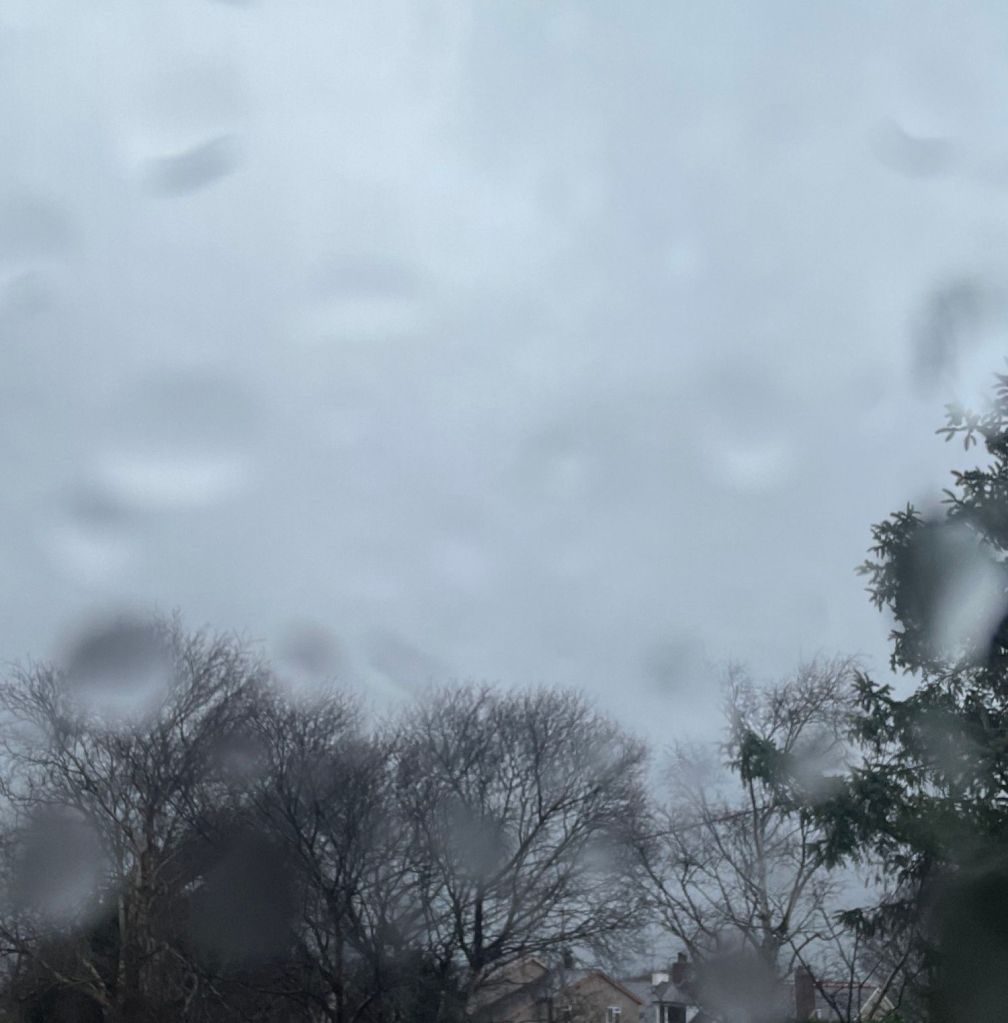
P.S. For all of you who are having snow in their places, have fun! It’s so windy and rainy here as my photo shows, but surprisingly it’s warm!