
personal thoughts

Out of Sight

Do you know this saying?

“Out of sight, out of mind.”

In Egypt, people say: “Out of sight, out of heart.”

Which one do you prefer?

Well… it seems to me that both sayings are talking about different things.

The first one is so true. 

If you can’t see something fully, you can’t remember it. 

It just slips from your memory,

simply, because you have no interest in it.

The second one talks about emotions, 

and about special people—

those close ones, 

the ones you love, respect, and appreciate.

According to the Egyptian saying, 

if those close ones are out of sight, 

your feelings will change 

and may become less or fade away.

But can this really happen?

What about children

when they grow up and leave the nest?

Will parents and children apply this saying

and let their existence slip out of the heart

just because they are out of sight?

Of course not.

Why doesn’t your pet, the one who died

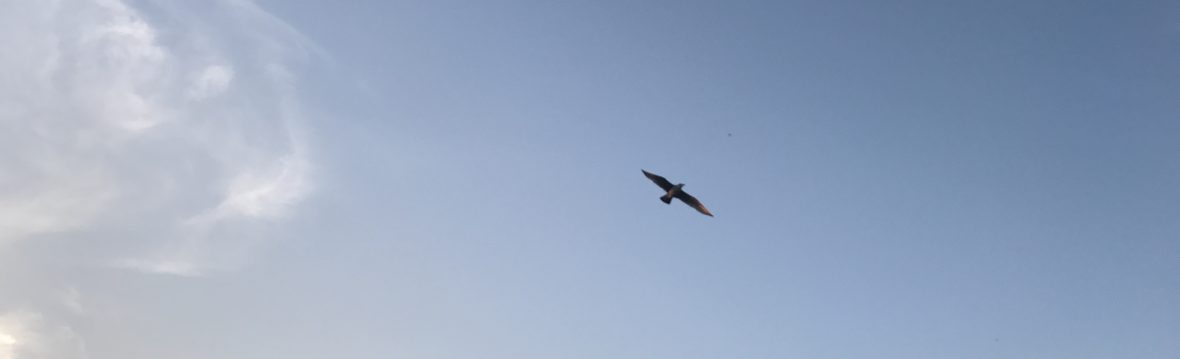
 or the one who flew away, 

still have a place in your heart?

You still smile at their memory.

You still remember them.

What about the one who once treasured with sincere advice?

Or the one who showered you with the kindness you needed most?

That respected teacher who taught you morals before  knowledge?

Wouldn’t they always be in your heart? 

But of course, my interpretation of the Egyptian saying

cannot be applied to all people. 

Some people may push you to drop them out of sight and out of heart,

completely and without regret.

You will offer thankful prayers with utter sincerity when they are out of sight. 

As for your heart, it wouldn’t mind,

for those people would never have had a place there anyway.

So…

can we agree that the special will always be special, 

and that those dear, happy memories, 

will always be in sight and in heart. 

And.. remember 

the heart always has its own memory 

regardless of sight,

regardless of distance 


With in–sight-and- in –heart thoughts,

Nahla

Philosophical musings

Master Your Emotions

That’s the title of a book I heard about but haven’t read. And, honestly I don’t think I am interested to read it. 

So why am I talking about it now? 

Simply, it’s title inspired me to write what I am going to share in this post.

And since I have no idea what’s in the book, please don’t mistake this for a review or a critique. You can say… it’s one of my philosophical musings.

Well, mastering your emotions is … a bit complicated process. 

You know why? 

Because things might spiral out of control.

No necessarily because of you but because of the power of stimulation.

So imagine, just imagine, you open the window and see your neighbour wearing this Churchill-cat smile as they offer food to a tired, lost, and hopeless cat. 

You smile, then turn away to look at other things with happy and kind emotions overflowing inside you. 

An hour later, you hear desperate, heartbreaking meows.

You rush back to the window, and there is the neighbour—hitting, kicking, and tormenting the poor cat. 

Why? You wonder. 

You call out to the neighbour, to have some mercy, some kindness, some humanity. 

But no.

She turns deaf ears and blind eyes to whatever you say, beg, or plead.

How would you feel, then?

How can you master your anger and disgust?

Well… that depends.

If you doubt their sanity, or if they show critical symptoms of cruelty, sharp tongues, or… power.

The first tactic might be to avoid them. Once you’ve gotten away, you may pray that hell become their eternal home soon, and with the rest of the devils.

The second tactic might be to pretend that nothing happened, as if the cat has no soul, as if the neighbour were joking, as if it were all fictional. But, since that’s a big lie, the neighbour will laugh at you, at your silence, your weakness, and… your inability to stand up even for a poor cat.

The third tactic might be to open your door to the poor soul; feed it, heel it, and cuddle it. In other words; be the kind, the love, and the human. And, let the neighbour watch, or perhaps laugh, or perhaps burn with anger. 

And, one day, we will all reap the harvest of our own deeds.

Sometimes you can master your emotions, but have you ever wondered why, when, and at what cost? 

With hope and peace,

Nahla