

Just writing, Philosophical musings

Faith and Friendship and December 

“Anyone who requites faith and friendship as I did, will have to pay for it.”

The Professor’s House by Willa Cather. 

I’ve already shared my review of this novel, and this quote has inspired me to write this post.

The reason behind this quote was the loss of a friend —not through death, but through disagreement and disappointment. One was an idealist, the other an opportunist. Though they made good company together, at the first conflict, their paths parted. It was the idealist who said these words, lamenting the loss of true friendship to uncompromising ideals.

Faith and friendship are such precious gifts— too precious to be returned, too fragile to be repaired.

One is blessed to have them strong, and to keep them safe and nourished. 

How strong? How safe, how nourished? 

The balance depends on how much you are committed.

Along this journey,

perfection and idealism are neither required nor recommended.

Materialism, modernism, and other -isms have no place here.

These precious gifts need a simple home with strong pillars.

Understanding and sincerity can be the main pillars. 

But, if the pillars break, the building will collapse.

Then, regret follows,

and what a heavy, merciless creditor regret can be!

In brief, this is my interpretation of the quote, which I see as the bulb of the book. And perhaps you might think of it as… just a pat on the shoulder on the first of December. 

With hope and peace,

Nahla

Books

Can the life that was right for one be ever right for two? 

“I wondered whether the life that was right for one was ever right for two!”

That’s a quote from My Antonia, which I’ve just finished reading.

Isn’t it true?

It is.

Some people, for example, choose a simple life, feeling happier and more secure in small cities. But, others prefer the busy life in big cities where there are more people, more opportunities, and more entertainment. 

Can these two groups swap places?

Maybe.

But things depend on the urge and the necessity behind the change. In other words, change happens for a reason. You don’t just wake up in the morning and decide to leave your house and move to the mountains… or do you? 

Now imagine how destiny might bring together two people with different life preferences. What do you think their life would be? 

In the story, Antonia’s parents have this acute different preferences, not just about places but about many things. Her father left their homeland, taking his wife and four children to the new land. If it hadn’t been for his nagging wife, he might have never left, would’t have never sold the precious and the worthless to embark on this journey. He couldn’t adapt to prairie life, and his wife never stopped complaining. Then, one day he took his own life. (Oh, the poor man he might have shot himself twice, especially now, when laws are changing.)

But Antonia managed to find a balance, and to help her city -loving husband adapt to prairie life though not quite as much as she did, but enough. And, at least, he never reached the desperate limits her father had.

Now can the life that was right for one ever be right for two? 

Yes.

When there’s love, understanding, and a sense of belonging everything becomes possible. 

By the way My Antonia is just about Antonia. 

With hope and peace,

Nahla 

Philosophical musings

Deep: What Else Can Be Deep?

This is not about seas, oceans, rivers, or any natural or artificial forms of water.

By the way, don’t you agree that artificial rain feels fake in movies, but real in books? Or am I the only one who feels that?

But why wouldn’t you agree? 

Don’t you use your senses more deeply when reading than watching? 

Well, I do. 

Imagine the difference; instead of taking things for granted in a movie, think of how your mind creates a world of its own while reading. It has many functions to perform throughout the reading episode. It reads, listens, talks, colours, breathes, moves, builds, plants, and  does even more creative things. 

Hopefully now you get my point.

Now back to ‘deep’, where else can we use it? 

Well, what just crossed my mind is books, or literary works in general.

Sometimes we say: it was a deep book. This is either because we understand nothing … or because it moves us deeply.

Honestly, if I don’t understand a book, this means I found it dull, obscure, but never deep.

But, may I make a confession? 

One day after reading a book I found it… different, and decided, for the first time, to leave a comment. 

What do you expect I wrote?

“That was a deep book.” 

To this day, I have no idea how I linked ‘deep’ to a story that was, for me, simply different. 

How annoying and embarrassing!

Ever since,  I’ve been thinking twice before using ‘deep’ to describe a book.

Throughout my reading, I’ve found that when a book moves you, it doesn’t necessarily mean crying buckets, dreaming happily at the ending, or grabbing the dictionary to search up most of its terms. 

It’s more about the meanings, the voice, and perhaps the message of the work. The elements that urge you to think, to learn, or to understand things you have’t known before. 

In other words, it not just about reading catchy content, but about drawing lessons from it.   

With hope and peace,

Nahla

Just writing

The Lark

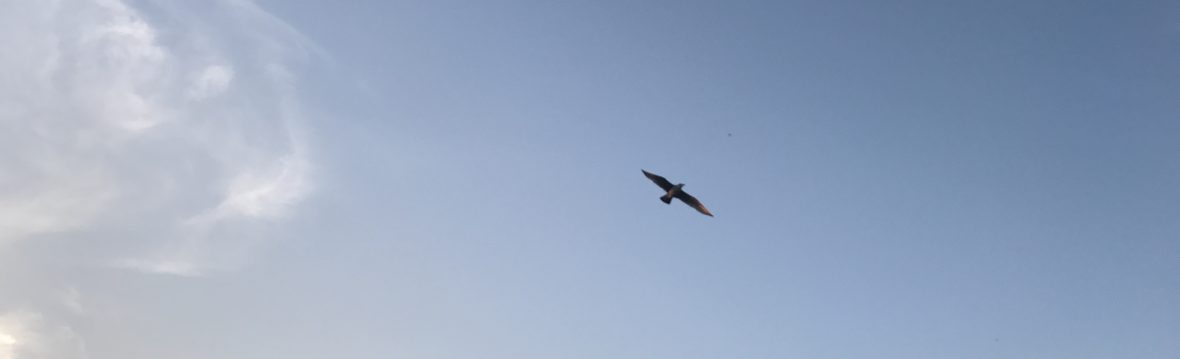
That little, talented bird with a beautiful voice that is music itself. I’m not sure I have seen one before, but I imagine he must be among those nesting in the nearby trees. 

Well … why did he crossed my mind today? 

Simply because of the book I have just finished. The Song of the Lark, which, by the way is not about the bird species. 

Can you  guess what it symbolises in the story?

It’s not hard to guess for birds, in most cases, symbolise freedom and ambition.

There’s a poem about this bird, but I haven’t read it yet. Perhaps another time. 

Away from the book and the poem, doesn’t the bird, with its unique name, feel like a musical poem? Full of energy and happiness? Beside it’s a migratory creature with an adventurous spirit. 

Watch out for him in the morning, for he’s the friend of light and the colourful kite dancing in the blue sky. 

With hope and peace,

Nahla

personal thoughts

Reading Books Can Be Just Like Meeting People


Well… finally, I’ve finished  the book I was reading over the last month.

By the way August was  a good month with all its hustle and bustle. It’s the month of the warm, bright summer and long off work, off school break. It stirs in you that unique mixture of memories; your old time school holidays, family gatherings, and some special celebrations. Don’t you love it, even with its shocking heat waves?

Now,  back to the book: The Ambassador by Henry James. Or is it James Henry? Oh my… my brain can’t even digest the man’s name. So, this is the book that gave me a headache every time I opened it over the last month, and a few days from the month before. Have you read it? If you have, and if you enjoyed it then mes félicitations! And if you haven’t or are thinking about reading it, please go ahead, and don’t reference my experience as an excuse.

I don’t intend to share a book review in this post, perhaps I will do later on my book review blog. What I’m sharing today is the thought that struck me after finishing it: how reading books can be just like meeting people.

Have you ever experienced those feelings when you meet people for the first time? Sometimes, you feel excited, relaxed, and comfortable. Other times, you feel totally the opposite. And sometimes, you feel nothing, just neutral. That’s all expected, and that also happens when you read a book. But there’s another kind of experience, something deeper than first impressions.

The book reminds me of how you can meet others and how, for no clear reason, you choose to challenge your feelings, silence your inner voice, and keep socialising… or keep reading. As time passes, you give yourself a chance; one, two, three, maybe tens, to find something mutual, something interesting, or even honest, but … you barely find any.

But, isn’t that, in the end, why you can congratulate yourself?
Why not?
You tried to reach out. You tried to understand. And, you didn’t judge the book before reading it all.

The effort is always worthy of celebration, isn’t it? 

With hope and peace,

Nahla

Just writing

Don’t Follow This Reading Strategy

I’m currently reading one of Henry James’ books. As usual, I knew about the book while reading something else. I read its description on Goodreads and decided to give it a go. The story is simple, and the characters are few and not complex.

Things seem good so far, right?

No, it isn’t.

I started reading the book last month, and I’m not even halfway through. Perhaps I picked it up at the wrong time. I mean, it’s the summer holiday, with so much going on. But no, that’s not why it’s taking me so long to finish.

The prose is my main problem. I can’t enjoy reading it. Whenever I reach an interesting part, the author starts analysing and exploring another point. Still, I keep reading, hoping the book might surprise me… or I’ll finally give myself permission to stop.

So far, nothing has happened, and that’s why I advise you not to follow my reading strategy because it’s just stubborn.

I usually read at night but this book makes me yawn, and my eyes grow tired  before bedtime. I decided to speed up the process by reading during the day, but my patience wore thin. There’s always other chores to do, and reading this book will be the hardest. I tried the audiobook, but my mind kept wandering to many things except the book. And then, I thought: maybe it would be better to make some change. So I picked up another book, hoping to return to the first one with fresh eyes and some interest.

As I was searching for another non-fiction book, I came across a medical one titled Love Your Disease. Have you read it? It’s a bit like “love your enemy,” but is that even possible?

By the way, it is not totally medical with scientific terms and theories. It’s quite readable, with real-life experiences shared by a doctor about his patients. But since it’s not fictional, and I am not a physician, I feel I can neither accept nor discuss the book. In short, after skipping so many parts, I decided to stop reading it.

So, I’m back to James Herny. No, it’s Henry James. And, I’m just as determined to finish the book as I am to never read another by the this author.


With hope and peace,

Nahla

Just writing

Switching Reading Genres

It’s a good idea to switch up your favourite reading genre every now and then, isn’t it?
Well… I think so.

Take me, for example —I enjoy fiction, mostly classics. But sometimes, I feel … not bored, but craving something different. It’s kind of like craving dessert after a heavy meal.

Over the last week, as I was reading one of Henry James’ books at a turtle’s pace, I decided to browse a book on home remedies. It turned out to be both interesting and funny.

It was interesting because the book offers simple, useful remedies that might make you think twice before rushing to see the doctor. And, it was funny because, sometimes, it includes folk remedies that are pure superstiton. Honestly, I don’t read it cover to cover… just pick some topics about common ailments.

One of the most interesting points these books both explain and emphasise is Hope. As I read, I can feel how their natural remedies reflect the idea that every illness has a remedy—the very thing I deeply believe in.

Here’s a quote about the exact point:

“For every ill beneath the sun
There is some remedy or none,
If there be one, resolve to find it;
If not, submit, and never mind it.”

Now, what do you do when you have a hiccup?
Here are two simple remedies:

“Think of your lover. If he loves you, you will not have it anymore.”

And in case he doesn’t, you can recite this old English verse:

“Hickup, snickup, stand up, straight up,
One drop, two drops—good for the hick-up.”

That last one gave my daughter and me hiccups as we burst into laughing when I told her about it!


With hope and peace,

Nahla


personal thoughts

Can We Foretell the Future?

“…it is impossible to foretell the future with any degree of accuracy, that it is impossible to rehearse life.”

This post is inspired by this quote from A Room with a View by E. M. Forster—a book I finished reading a few days ago.

There’s an interesting irony woven naturally into the story. It’s about life, reminding us that it isn’t a script to be read, memorised, or rehearsed. Instead, it flows and surprises us in unexpected ways.

Strange, how others, unintenionally, play a role in paving our path to happiness without being a part of it.

Strange, how those who wish us ill end up helping us grow and live better lives.

Strange, how annoying, boring delays save lives.

Strange, how the rush—that nagging impulse—is just an urgent call to fulfil something before it’s too late.

And isn’t it strange how we make plans, rehearse good speeches, feel things under control…, and then life surprises us in the most miraculous ways.

Isn’t that just life?

Isn’t that why God reminds us: it’s temporary?


With hope and peace,

Nahla

personal thoughts

Spring And May


It’s almost the end of June—I know. But the book I am reading nudged me to use Spring and May in this post.

Don’t you like Spring and May? I believe most of us do. They are full of colours, warmth, hope, beauty, brightenss, rebirth, and so many other positive qualities.

Yet we… no, some… perhaps a few are just fighting the first and engaging in a usuelss war against the second.

Now, just a second— I mean Spring and May literally, not literarily.

Here are two quotes to ponder over this weekend… or perhaps for the rest of your life.

“Don’t go fighting against the Spring.”
To me, this means: don’t try to spoil beautiful moments. If you can not live them, at least pause to appreciate them.

“War not with the May.”
This has a similar interpretation to the other, but war is stronger, more dangerous than fight, right? To start a war is to destroy things completely, mercilessly, savagely.

So, “War not with the May” means: do not destroy life,  beauty, hope, or dreams. Let May live. Perhaps its warmth, feshness, and tendreness can find a way into those dark, solid hearts.

By the way, spring is not just about May. Your soul and heart can blossom at any time throughout your entire life.

Haven’t you seen flowers in December, and green trees in Januray?

With hope and peace,

Nahla

holidays

The Easter Holiday– Part Two

So, as I spent a few days coughing and sneezing, I decided to pause writing until I felt better. My decision was not approved by my mind. We started a fight–I insisted on pausing, while my mind, full of rage, making my headache even worse, kept pushing ideas into my head even invading my dreams. I ignored it, and when I turned my attention to other things, it surrendered.

First, I began with my French lessons. I noticed that I had been awarded a three– day Duolingo Max trial for my hard work. It offered real–life conversation practice which turned out to be such a great fun. Do you know why? Because when you’re having a bad cold, all your letters sounded hilariously different. In my case, with this terrible, awful cold, not only my pronunciation was affected, but also my hearing. So, the real–life conversation practice turned into a comical episode. We would start talking about one thing and end up talking about something totally different, with many words lost in between.

However, I was shocked by my poor performance during this real–life conversation practice. I thought I was doing very well–which is true for reading, partially true for listening, and average for writing. But when it came to actual conversations, my Arabic, English, and French clashed with each other. The outcome was so funny, so poor.

Next, I checked my reading challenge progress, which is moving at a turtle’s pace. But I don’t really mind as I am not planning to break the Guinness World Record for reading speed. So, I decided to finish the book I started at the beginning of this month: Sixpence in Her Shoe. I came across this book while reading another. Piqued with curiosity, I wanted to see how it tackled the topic of being a housewife.

The book turned out to be good and enjoyable to read though, to be honest, I skipped many parts that had so many details– sections about furniture, houses prices and locations, housekeeping, food recipes, kitchen equipment, and more aspects of life from the sixties of the last century. However, overall, it provides both amusing and expressive arguments about what it is like to be full-time housewife and why it is considered the best profession for women. Thank God the book didn’t disappoint me.

By the way, if you decide to switch off your social media accounts, say, for a few days, do you think you’d miss much?

I wouldn’t, and  this exactly how I feel about being a full–time wife and mum. I believe I haven’t missed much, but I know I would have if I hadn’t.

With hope and peace,

Nahla